While most of us learned our ABC’s in kindergarten, I am a firm believer in repetition and relearning as we grow. Relearning the alphabet for fall protection is something I learned early on as a safety professional.
So what exactly is the ABC’s of fall protection? The ABC’s of fall protection is a simple way to remember the components of fall protection and what to look for when inspecting fall protection before working from heights.
What are the ABC’s of fall protection? (Don’t worry, this alphabet only includes 3 letters.)
Anchorage Point
Body Harness
Connecting Device
(A)Anchorage Point
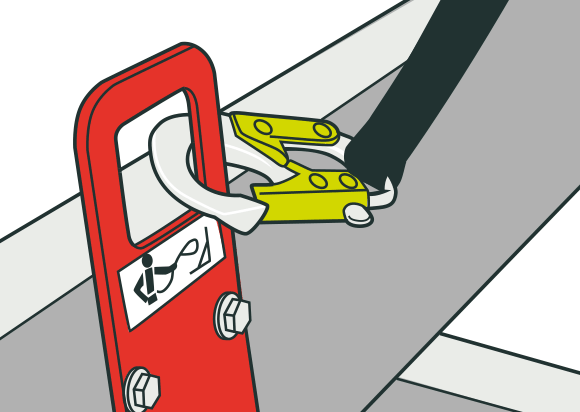
The anchorage point is the item you are tying off to. According to OSHA only approved anchorage points can be used to tie off to. This anchorage point must be able to support 5,000 lbs of force per employee. So, that piece of conduit hanging from the ceiling in your basement probably isn’t the best thing to tie off to if you need to change a light bulb. You can not tie off to handrails or mid rails! In man lifts for example, there are designated approved anchorage points that the manufacture will identify to the operator.
(B) Body Harness
Second for the Fall Protection ABC’s is Body Harness. All harnesses are different. When inspecting your harness there are some key things to look out for. Fit your harness for your body specifically. No sharing!
Inspect the webbing for rips, cuts, and tears
Look at the hardware of the harness for rust, burns or cracks
Verify the tag of the harness for the harness’s capacity.
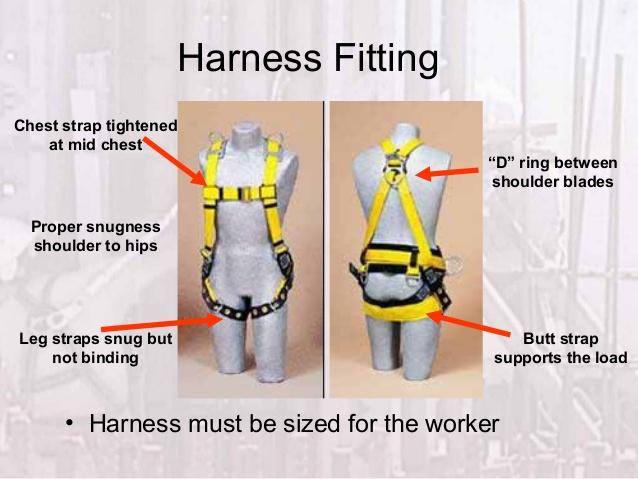
Store your fall protection in a designated area away from all other tools and out of weather/direct sunlight. If your harness is damaged, immediately take it out of service and notify others to not use it. Make sure to fit your harness for your build and body frame. The D-Ring should be between your shoulder blades, chest strap right at the mid chest line, and leg straps should allow 2 fingers in-between, so it is not too loose or too tight.
(C)Connecting Device
The last letter of the Fall Protection ABC’s is C” for Connecting Device. There are typical 2 types of connecting devices
Lanyards
Self-retracting devices
When selecting a connecting device, you need to understand your working height. See the link below for the best way to select your connecting device.
Slips/Trips/Falls are the number 1 leading cause of fatalities, and injuries in both constructions, and in general industry. According to the National Safety Council, in 2016, 697 workers died from falling to another level. In addition, a whopping 48,000 workers were injured from falls, that required days off of work.
The OSHA standard for fall protection for construction is 6ft. For general industry, the standard says 4ft. In both construction, and in general industry, working from heights is a daily activity. Some examples of working from heights are:
Leaning edges such as stairwells
Rooftops
Working from ladders
Performing work from man lifts or scissor lifts
Open holes/trenches
Standing on top of tanks, vessels, or storage containers to work
Walking on or working from catwalks
What areas does your company work at?
Any time you are working from heights, remember the ABC’s of fall protection. All falls can be prevented. If you see another coworker working from heights unprotected, utilize Stop Work Authority, and correct the behavior. For tips on how to utilize Stop-Work Authority, see our separate blog post:
The easiest way to avoid a fall, is to prevent it from taking place. Below are some systematic approaches to preventing fall hazards.
Identify Fall Hazards
As you arrive to the job site, conduct a safety walk around and identify all areas where you are working from heights. Be sure to also identify other fall hazards such as wet/slippery surfaces, changes in elevation, and housekeeping issues such as loose extension cords, or building material. Discuss fall hazards on your JSA and make sure all crew members are aware of the areas they may be working in.
Eliminate
After you have identified all fall hazards try to eliminate the fall hazard. Examples of eliminating fall hazards include: installing guard rails around leaning edges, cleaning up spills, ensuring ladders are in good working order, covering open holes, and maintaining good housekeeping.
Fall Protection
Fall protection should be the last resort if fall hazards can not be removed from the workplace. Inspect all equipment and make sure all team members are trained on how to properly fit their harness. Calculate your working height, and select the appropriate connecting device. Pick your anchor point, and verify it is able to withstand 5,000 lbs. Want practice? Try the game Harness Hero available on the App Store and Google Play Store for FREE! This App walks you through different scenarios and shows you the outcomes of what a fall will look like after you select your fall protection. Below is a video showing how the Game works! Challenge yourself and try it out!
As a Recap
We understand the severity of fall hazards. We also understand how to eliminate fall hazards and how to mitigate them if the hazard can not be completely eliminated. The next time you are expected to work from heights say your fall protection ABC’st It could save you!
Did this article help? We hope this toolbox talk was informative, helpful and easy to relate to. Please visit B42L.com to learn more about strengthening your safety resume and other safety topics to improve your company’s safety culture.
If you are anything like me, you hate having other people tell you what to do. It can be very inconvenient to listen to other people’s wishes or commands. So when we are faced with people telling us what to do we often find ourselves landing in decision making land:
Obey thy request or face thy consequence
Decision making like this takes place in every aspect of our lives. For some people though, this decision making takes place at a physiological level. I am talking about Diabetes and Diabetic Emergencies.
What is Diabetes?
Diabetes is a disease where the body’s ability to produce or respond to the hormone Insulin is impaired. Now why is insulin such a big deal? Insulin helps regulate the metabolism of carbohydrates and glucose (sugar) in our blood and urine. People who have diabetes have a different set of requests sent by their body and different commands they need to follow.
When was the last time you tested your blood sugar?
Are you monitoring how much sugar you have consumed?
Is your blood sugar too high/low?
AGAIN WHEN DID YOU TEST YOUR BLOOD SUGAR?
Do you have your insulin?
Have you TESTED YOUR BLOOD SUGAR AGAIN?
Now you may be asking yourself why is it imperative to really monitor blood sugar when you have diabetes. The short answer to that is because if our blood sugar is too high or low, our bodies can have some serious responses. These responses could end up being life threatening and turn into emergency situations. Being able to recognize and respond to different diabetic emergencies can stop a problem from becoming worse and can in some cases save a life.
When Blood Sugar is Too High (Hyperglycemia)
When your blood sugar is too high it is normally the result of insulin not allowing sugar to be used for energy. Our body proceeds to find an alternative source for energy and breaks down fat. The problem with breaking down fat as energy is a by product known as a Ketone. Ketones furthermore turn the blood acidic and can cause the known condition of ketoacidosis.
Signs and Symptoms
Nausea and Vomiting
Confusion
Abdominal Pain
Fruity (acetone) breath
Excessive thirst and frequent urination
Loss of consciousness
How to avoid and respond to High blood sugar
Here are a few tips on avoiding high blood glucose levels. It is very important to keep open communication with your diabetes care team and primary care physician.
Understand your symptoms and risk factors
Exercising regularly
Keeping up with insulin regulation
Staying hydrated
NOTE: * If someone becomes unconscious, be prepared to use life saving skills such as CPR and First Aid*
When Blood Sugar is Too Low (Hypoglycemia)
Having low levels of sugar in the blood is known as Hypoglycemia. This is often caused by having excess insulin or could be caused by not having eaten enough food to provide the energy (carbohydrates) to stay above 70 milligrams per deciliter. Hypoglycemia can also frequently occur in newborn babies.
Signs and Symptoms
Irregular heart rhythm
Fatigue and shakiness
Anxiety and confusion
Irritability
Hunger and tingling sensation in around the mouth
Seizures and loss of consciousness
How to respond
Find an immediate source of sugar (15-20 grams of sugar)
Continue to monitor blood glucose levels after ingestion
Be prepared to perform CPR in case a person loses consciousness and call 911 or the designated emergency contact
First Aid Combatting Diabetic Emergency Situations
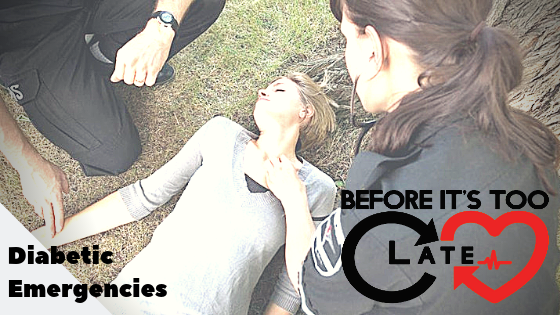
In either case of high or low blood sugar situations, it is extremely valuable to understand life saving steps in case a bad situation has turned worse. Knowing how to respond and what signs and symptoms to look for can allow bystanders or even yourself to alert proper emergency contacts about the situation. First Aid for each situation will be different so having proper training and certification will allow you to combat a diabetic emergency situation. If a person becomes unconscious, it is imperative to call 911 and if you are certified perform cardiopulmonary resuscitation (CPR).
If you are interested in becoming certified in First Aid and CPR you should reach out to local providers and take a class. These certifications are often valid for a 2 year period and will walk you through situations of how to handle diabetic emergencies. You can sign up for a First Aid and CPR class with Before It’s Too Late LLC by visiting their website at B42L.com. B42L services the tri-state area and provides classes for college students and businesses. If you don’t see a class that fits your schedule, simply send a request and they can schedule something for your personal schedule!
Wrap up
Being diagnosed with Diabetes can be a hard thing to manage. It comes with many challenges and constant monitoring to stay safe and stay protected. The important thing to know is you can manage this disease and you can furthermore be prepared in case of an emergency situation.
“Oh, the weather outside is frightful, but the fire is so delightful. And since we’ve got no place to go, let it snow, let it snow, let it snow!” The cold winter months and frigid temperatures are here for most of us. It is time to get prepared for the worst. Below are the two most prevalent winter related emergencies to be prepared for this snowy season.
Frostbite
Don’t get bit by Jack Frost this winter. Our first Cold Related Emergency to be prepared for this winter is frost bite. Frost bite is caused by exposure to extreme cold temperatures for an extended period of time. Frostbite causes tissue just below the skin to freeze. First onset signs and symptoms of frostbite include:
Prickling feeling of the skin
Numbness
Red, white, blue, and grey-yellow looking skin
Muscle tightness
Blistering in severe cases
Vulnerable Areas
When the body is exposed to cold temperatures, the natural reaction is for blood to rush to the torso to protect target organs. Because of this, several areas of the body are left highly vulnerable to frostbite including:
Fingers
Toes
Ears
Nose
Cheeks
Treating Frostbite
Recognizing these signs and symptoms is the first step to treating frost bite. If you or someone else is exposed to cold temperatures, it is important to immediately get the individual to a warmer area. Look for discoloration in vulnerable areas, and immediately remove damp or wet clothing such as gloves, socks, or hats. Replace the affected areas with dry and warm towels or blankets.
Discourage skin to skin contact for rewarming as this can cause blistering. Do not pick any scabs or blisters as this will damage the skin worse.Gradually increase the individuals body temperature and monitor the individual for changes in behavior. If the skin does not appear to be improving, seek further medical attention.
Hypothermia
Our second cold related emergency to be prepared for this winter is Hypothermia. Hypothermia is an extremely dangerous drop in body temperature. It is also usually caused by an excessive exposure to cold temperatures, but it does not take long to slip into hypothermia.
The normal body temperature averages 98.6 degrees. In cases of hypothermia, the core body temperature drops below 95 degrees and in severe cases it can drop below 92 degrees.
What Causes Hypothermia?
During cold temperatures the body must work harder to maintain its normal body temperature (98.6 degrees). While exposed to cold temperatures, heat loss occurs, mainly through natural breathing (exhaling) and radiation (increases from exposed skin to moisture).
If you are exposed to cold temperatures for an extended period of time, larger amounts of heat loss is likely to occur. The organs that normally produce body heat begin to slow down and move into “shut down mode” as a defense mechanism to protect the brain. It is vital to understand how to recognize the signs and symptoms of Hypothermia before it’s too late. When hypothermia kicks in, it can quickly become deadly.
Symptoms of Hypothermia
Extreme Shivering
Confusion
Glassy stare
Heavy fatigue
Grey skin
These signs and symptoms will normally begin with the shivering of arms and legs. As blood rushes to the torso to protect target organs, the arms and legs are now left with minimal amounts of warm blood. Shivering is the body’s natural response. The muscles of the arms and legs begin to rapidly contract in effort to redirect blood back to these areas.
If shivering is stops and the person is still in the cold temperatures, check for other symptoms. The person might be confused and have a glassy stare. If other symptoms exist, the person may be entering into hypothermia.
Lastly, their skin may have a grey appearance and they may become extremely fatigued. The grey skin tone, could indicate a lack of blood flow and fatigue would also imply the person is burning large amounts of energy quickly.
How to treat Hypothermia?
Hypothermia can quickly accelerate and is a potentially life-threatening condition. If you suspect someone is suffering from this Cold Winter Emergency here are some steps to take for treating it.
Remove all wet clothes and replace with dry towels or blankets.
Refrain from putting on jackets, or other sweatshirts. Hypothermia can lead do unresponsiveness. Towels and blankets are easy to remove if the person becomes unresponsive.
Gradually warm the person. Refrain from placing the person in a hot shower or a hot tub. Rapid warming methods can send the person into shock. Instead, gradually warm the person with small heaters.
If symptoms continue for 15-20 minutes and are not getting better, call 911 or the designated number.
Continue to monitor the person’s signs and symptoms and be prepared to give CPR if you are trained.
How to avoid Frostbite and Hypothermia this Winter
The easiest way to prevent Frostbite and hypothermia is to avoid extended periods of cold temperature exposure. If you work outside or are exposed to cold temperatures for longer periods of time, here are some other tips to prevent frostbite and hypothermia.
Layer Up
Checking the weather forecast the night before is the easiest way to stay prepared. Lay out your outfit the night before and don’t hesitate to break out the puffy jacket. It may lack on style, but it will keep you warm. We also recommend carrying a hat and gloves as we just learned ears, and fingers are vulnerable areas to frostbite.
Change your route
If you live in a city and walk to work, avoid the scenic route to the office this winter. Changing your route and taking the shorter 5-minute stroll could pay up big time and reduce the amount of heat loss you experience.
Pack Extra
Making that long haul to see the in-laws? Packing an extra set of warm clothes, and a blanket in could be the difference of beating the cold if the car breaks down. Emergency car kits exist for longer hauls.
Here are a few places to go to find cold related emergency kits and safety items!
Winter is coming! Aside from the Game of Throne’s tagline, yes, the winter months are upon us. Along with cold temperatures and snowfall that are present during winter months, an increase in vehicle incidents are statistically on the way as well.
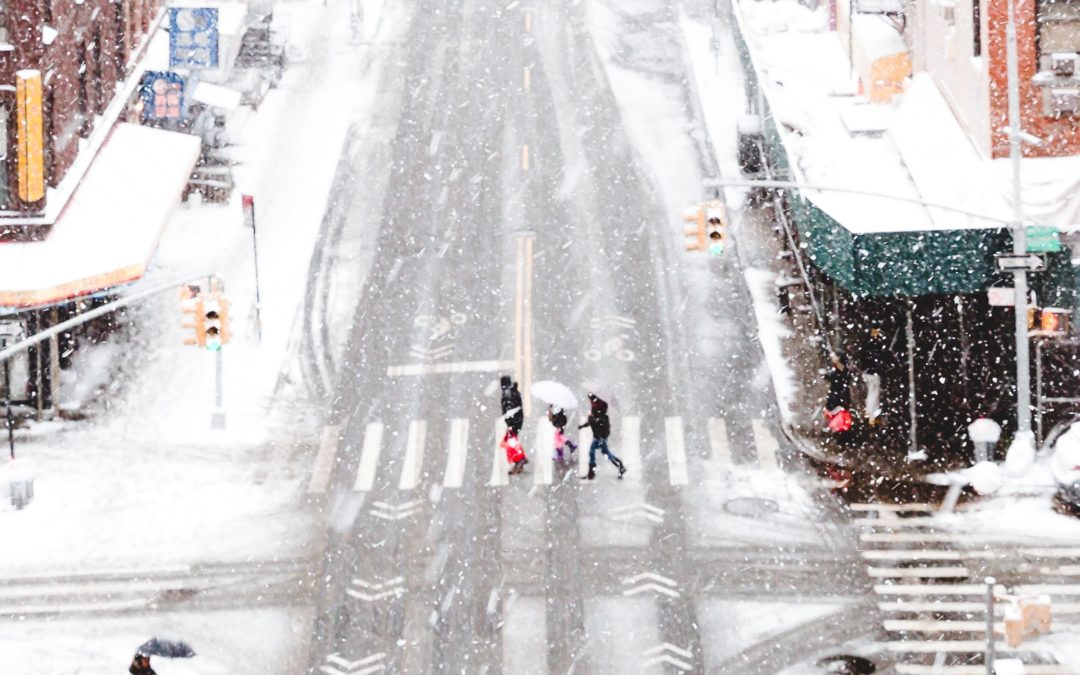
According to the Federal Highway Administration, nearly 1,300 people are killed in vehicle crashes and more than 100,000 people are injured in vehicle crashes every year with road conditions that contain snow, slush, and icy pavement.
In the busy business world of today, it is imperative families, employees, and individuals can travel the roads safely. Just because there is snow on the ground, doesn’t mean vehicles incidents have to occur.
Here are the Top 8 Winter Driving Safety Tips that can reduce the likelihood you will be involved in a vehicle accident.
1.) Check the weather radar for snow
The first way to be prepared for driving during winter months and improve your winter driving safety is to check the weather radar the night before. Checking the radar not only allows you to plan for your trip the next day, but it gives you a live update on any storms that could be passing through your area. Keep in mind, weather patterns change, so it is important to check the weather radar several times throughout the day.
2.) Fix any maintenance issues
Have you been ignoring those lights on the dashboard telling you to service your vehicle? If so, you better plan on taking your vehicle in for service. Keeping your vehicle serviced during winter months gives you the assurance that your 2008 Toyota Camry is actually safe to drive even with heavy snow. Don’t ignore these warning lights. If you are in an area that statistically receives heavy amounts of snow fall, consider changing your tires for a winter recommend tire. Here are a few resources with tips on how to winterize your vehicle.:
Conducting a quick inspection of your vehicle on a daily basis is one way to improve your winter driving safety. Allow the vehicle to warm up 15 minutes before you are set to leave and bust out that ice scraper. Dust off snow or ice that is on the windows, turning signals and on top of your vehicle. Walk 360 degree around your vehicle and look for any signs that it is mechanically unsafe to drive. Make sure to frequently check that your windshield wipers are in good condition and windshield wiper fluid levels are topped off. Test and verify the turning signals and 4-Way Hazard lights are working properly. If there are any lights that are not working, get it fixed immediately. This quick 5-10-minute check is worth it.
4.) Leave the house earlier
During winter months it is tempting to stay in your warm, cozy bed that extra 30 minutes, so you don’t have to face the reality of the blistering cold. This is a major Error Precursor. Road conditions in the winter months often makes it unsafe to drive the normal posted speed limits. If it normally takes you 20 minutes to get to work, leave your home an additional 20 minutes earlier. Running late to work contributes to drivers feeling the need to speed. Leaving early will allow you to avoid being late and improve your winter driving safety.
5.) Work from home
More and more companies allow the option to work from home to their employees. If you can work from home, avoid the trip to the office altogether. Working from home keeps more drivers off the road and reduces the number of vehicles that could potentially be involved in a vehicle incident.
6.) Utilize car trip services (Uber & Lyft)
Taking an Uber or Lyft may be a safer alternative than driving your own vehicle to the grocery store or to get takeout especially during winter months. The two trip service companies allow individuals to request a ride from almost anywhere. They also offer Programs such as Uber Eats, where drivers will pick up food up for you and deliver it for a small fee. Instead of going to get takeout food, have it delivered right to you! Be advised however, before getting in any car trip service, that the driver is ultimately in control of the vehicle. If you feel your car service driver is driving unsafely, request they slow down or pull over at a safe location.
7.) Minimize Distractions Behind the Wheel
If you can’t work from home, and requesting an uber to work is out of the question, minimizing distractions behind the wheel is one of the most proactive solutions to reducing vehicle incidents. Distractions can include: cell phones, radios, eating, drinking, passengers, pets, etc. Utilize Bluetooth audio ear pieces for hands free calling. Turn the radio off and wait until you get to work to drink your Dunkin coffee. If there are passengers in the vehicle with you, ensure everyone has their seat belt on, and is not distracting you with questions like: “Did you see the new Netflix series that was just released last night?”. The simple distracting conversation can wait.
8.) SLOW DOWN This Season
The easiest way to to improve your winter driving safety is to SLOW DOWN! Practice the 3-Second Rule and allow more space in between you and the vehicle in front of you Here is how to practice the 3-Second Rule. As you are driving pick an object that you will pass (road sign, mile marker, structure, building etc). Count to 3 out loud. When the vehicle in front of you passes that object begin to count to 3 seconds. If you reach that same object in under 3 seconds, you are following to closely. Monitor road conditions and allow more space between you and other vehicles on less maintained roads. If there is excess snow, ice, or slush, increase the 3 seconds, to 5. When following larger vehicles such as tanker trucks, or eighteen wheeler’s it may be necessary to increase to 10 seconds. Braking on snow and ice takes longer. Give yourself more space and slow down.
Was this helpful? Leave a comment, and check out our other blog posts for more safety, first aid and health care tips. Go to b42l.com
Because you are not superman you most likely fall into one of these three categories:
Employee
Employer (manager/decision maker)
Community Member
Although all of these groups are unique, there is one evident similarity between them. That similarity is, each groups member’s are at risk to either suffer an emergency situation or be a bystander in an emergency. Having a proper Emergency Plan in place is a proactive step to ensure your staff/group is aware of these situations, but what happens when they need to act?
If the situation becomes life or death, can you confidently proclaim: “My employees have the best fighting chance”
If you are unsure please continue reading.
Reasons to Train Your Staff for an Emergency Situation
The Workforce is Unprepared as a Whole:
According to the American Heart Association 55% of employees in corporate offices, hospitality, education and industry/labor cant get CPR/AED/First Aid training from their employer. What was more shocking is that nearly 50% of employees couldn’t even locate an AED in their workplace.
US Occupational Safety and Health Administration (OSHA) reports that there are somewhere close to 10,000 cardiac arrest cases occurring in the workplace every year.
Prevalence of Diverse Emergency Situations: THE STATS SPEAK FOR THEMSELVES
The CDC reported the number 7 cause of death being diabetic emergencies. There were a total of 79,535 lives lost between 2011-2014. With nearly 26,000 deaths every year, diabetic emergencies are a tremendous threat and should be taken seriously.
There were 1.7 million emergency department visits with asthma as the primary diagnosis in 2016. Many people believe asthma is a condition that only athletes suffer. It is evident that many individuals visit the emergency room due to asthma related emergencies. The best plan of action you can take is having your staff aware of these statistics and preparing them to respond.
The CDC also reports that there were 16 million cases of Hay Fever in the past 12 months (2016 data). Hay Fever, is an allergy caused by pollen or dust in which mucous membranes are inflamed in the eyes and nose. Whether you are in the landscaping business and are exposed to grass, or an office that has routine dust collection, your EMPLOYEES ARE AT RISK!
These are just a few of the emergency situations a workforce could be exposed to. Being prepared in the event of an emergency is the best way to ensure you protect your employees and reduce the risk of fatalities caused by emergencies.
COMPLIANCE COMPLIANCE COMPLIANCE
One pressing reason to get your staff trained is to ultimately protect yourself against fines and auditing scares.
“In the absence of an infirmary, clinic, or hospital in near proximity to the workplace which is used for the treatment of all injured employees, a person or persons shall be adequately trained to render first aid”.
Many first aid programs cover the following topics:
Shock
Diabetic Emergencies/Allergic Reactions
Breathing emergencies including choking
Slips/trips/falls (suspected or obvious trauma causing broken bones)
Bleeding emergencies
Heat/cold related emergencies
Suspected poisoning/overdose including proper Naloxone protocol.
Now that we have covered a few reasons why the employer should invest in preparing for emergency situations, let’s take a look at why employees and community members should BUY IN TO EMERGENCY TRAINING:
Reasons Employees or Community Members should become trained
You could experience an emergency yourself – if you are trained in emergency preparedness, we applaud you in your efforts to provide care. All too often though, there have been instances where the person who was the designated trained, experiences an emergency themselves.
You can use your skills outside of the office – While we have been highlighting workplace preparedness, you may end up in a situation out of the office that requires your skills to be used.
Rules have changed – Yes, you may have taken a CPR class 20 years ago when you were in PE. That being said, certifications are only valid for 2 years upon completion. The reason behind a 2 year certification is because standards change and science teaches us more up to date information to apply to use. One of the biggest changes is the use of Compression Only CPR. In this form of care, a responder chooses not to administer rescue breaths.
Take a look where the fitness staff used their skills out of the classroom to help save the life of a Gonzaga basketball player on the court.
There are plenty of resources available to you. The most important thing to keep in mind is where the information is coming from. Having trainers that are certified instructors makes the difference and brings credibility to your event. Here are a few resources:
B42L is based out of Pittsburgh, PA and has certified nearly 1,000 participants
B42L travels to your location and provides onsite training
B42L has all instructors certified through The American Red Cross
B42L has trained companies in the following industries: Oil and Gas, Home care and nursing, physical therapy, trucking, construction, manufacturing, and many more
You can also use resources such as The American Red Cross or American Heart Association.
Final Thoughts: It is important to take ownership of safety protocol and emergency preparedness. Employers should abide by OSHA regulation to stay in compliance. You could fall victim to an emergency situation yourself. B42L is proud to serve your training needs!
Visit B42L.com to save your seat and check out other safety resources.
Was this helpful? Leave a comment and connect with us on social media or you can visit our website atB42L.com
You also justify your thought process because of the similar case below:
My uncle Terry told me he doesn’t vaccinate his kids against Influenza because vaccines cause Autism and Cancer!
It is very normal to ask yourself these questions. It is also extremely relatable due to the simple fact that we all have an Uncle Terry in our lives. The answers to your routine questions are provided below:
What is the Flu?
The word “Flu” is an abbreviation for Influenza. Furthermore, Influenza is known to attack the respiratory system and cause illness. According to the CDC, most cases of the flu are not deadly, but some cases can be life threatening and, in some cases, kill the host AKA YOU. That being said, lets answer a few questions you have about the flu and understand the importance of vaccinating against the virus.
There are four types of flu viruses: A, B, C, D. The Human Influenza A and B viruses cause seasonal epidemics of disease in the winter months almost every year in the United States. The C and D viruses do not generally cause epidemics, so we will focus on A and B viruses. Both A and B viruses can be broken down into different strains.
Each year “experts” make the best prediction of which virus will emerge and a vaccine is made in effort to prevent the flu from attacking. These Viruses are furthermore named and a naming structure was accepted by the international community (World Health Organization better known as the WHO) in 1979. The flu typically is transmitted by droplets made when people cough, sneeze, or talk. The droplets are inhaled into the lungs and the virus gets to work multiplying itself.
What Are the Common Signs and Symptoms of the Flu?
The influenza virus has very clear signs and symptoms. Here is a list of the common signs and symptoms that the flu virus may cause:
Fever
Cough and sore throat
Body and headaches
Chills and fatigue
Vomiting
Loss of appetite
Although a fever is a common sign and symptom, it is important to know not all cases of the flu will show a fever.
Is the Flu the Same Thing as a Cold?
A cold is a mild respiratory illness that is less severe than Influenza. The common cold normally beings with classic signs of a sore throat and a runny nose. Colds normally last a week in duration but can develop into sinus infections or worse if untreated. My mom always rattled this saying to me when I was facing a cold as a child.
3 days coming
3 days staying
3 days leaving
This motherly DIY diagnosis was a quick and easy way to let me know, that the tissues would only be required for a few more days. It was also important for her because if my symptoms did not get better, than she would need to make a trip to our family doctor or local Med Express.
Although my mother is a nurse, I just want to point out that this was her motherly way of helping me through the common cold and not a medical diagnosis. If your symptoms are getting out of hand, make sure you get checked out and evaluated.
How Can I Fight the Flu?
This is the important part of our discussion. Yes, you can protect against the flu and there are preventive measures. Although nothing is 100% effective, you can dramatically reduce your risk for contracting the illness. Here are a few steps:
Get a flu vaccine – We hate to break it to uncle Terry, but it has been proven that the flu vaccine does not cause any type of cancer or autism. The CDC reports that the flu vaccine protects against the viruses that are most common each flu season. Vaccinations are extremely important for individuals younger than 5 years but older than 6 months as well as adults above 65.
The higher risk populations also include pregnant women and residents of nursing homes.
Preventative actions that reduce the spread of germs – These steps are the simple things we know and sometimes ignore. During flu season you should wash your hands regularly, cover your nose and mouth when you cough or sneeze, and avoid touching surfaces that many people are also touching (door knobs, handles, railings)
You should also make it routine to clean and disinfect surfaces and objects that could be contaminated by germs and avoid close contact with sick people.
The use of PPE or Personal Protective Equipment is important. PPE examples include breathing masks, gloves and other forms of sterile barriers that reduce the risk of infection and spread of disease.
Listening to your doctor – if you do happen to get the flu, listen to your doctor. You may be prescribed antiviral drugs. Antiviral drugs are different than antibiotics and are not available over the counter.
Can I Die from Influenza?
Remember, we did mention that most cases of the flu are not going to kill you. That being said, the CDC still keeps us up to date with the over all tracking of hospitalizations and deaths that Influenza inevitably causes.
Since 2010, there has been around 36 million illnesses associated with the virus. Additionally, the CDC reports there around anywhere from 12,000 to 56,000 deaths per year associated with the Influenza Virus.
Side Effects from the Flu Vaccine:
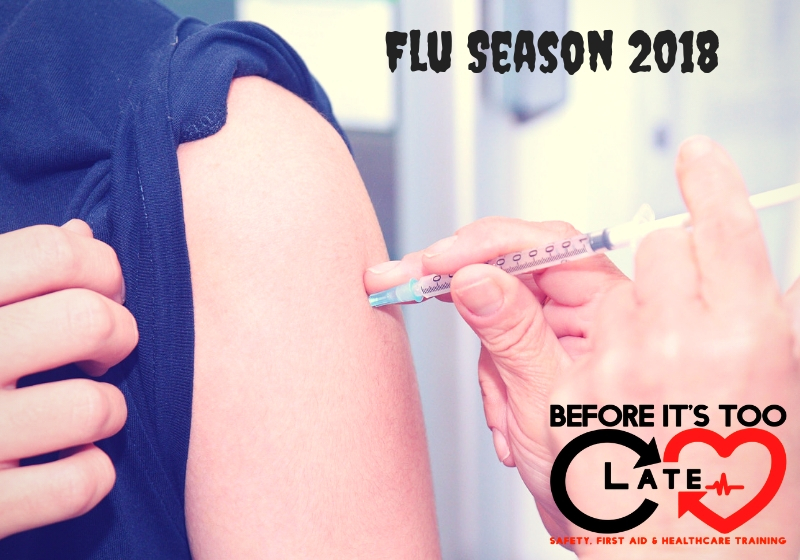
Because the flu vaccine is typically injected via needle, you may experience a few side effects. It is very common for individuals to have a sore upper arm and in some cases you may experience achiness and a small fever. Nonetheless, the 2 second sacrifice provides you with great preventative consciousness and you could even be walking out of the doctor’s office with a Star Wars bandage!
Should I get vaccinated for the Flu 2018-2019?
The short answer is YES. You should get vaccinated. The expression, “Better safe than sorry”, best describes the risk behind not becoming vaccinated.
Reasons to get the Influenza Vaccine:
Contracting the flu virus can cause illness and in some instance’s death
If you contract the flu virus, you risk spreading the virus to others
When you contract the flu virus, you may have to miss out on: work/schooling/daily activities
Getting the flu vaccine reduces the risk of flu hospitalization, which holds financial ramifications
Where can I get the flu vaccine?
The flu vaccine has become increasingly more accessible. You may be able to obtain the vaccine from:
Primary care physician
Local pharmacy
Onsite work or school related clinic
If you do not have access to these resources, I strongly encourage you to log on to the HealthMap Vaccine Finder tool. This tool allows you to plug in your zip code and provide addresses and facilities that offer the vaccine. They also provide directions, website information and allow you to plan your trip via Uber!
One of the biggest health disparities associated with participating in any type of medical care is cost. Unfortunately, people are very quick to roll the dice and bet on not contracting the virus.
The good thing is, it is very common for health insurance plans to cover vaccinations and most of these costs are built in to your healthcare coverage. If you are paying out of pocket for your vaccination, most vaccinations range from the $14-$40. Taking the preventive step and cost for vaccination is the wiser decision because like we previously mentioned, Influenza has associated financial consequences.
When you decide to get the Influenza vaccination, you are reducing the risk of obtaining the virus. Consequently, you are also reducing the risk of: hospitalization, antiviral drugs, lost compensation due to missed work and much more. The few dollars you spend will inevitably save you money in the long run.
I Don’t Like Needles
Unless you are someone who likes pointy objects penetrating their skin, I think it is safe to say we all don’t particularly have an affinity for needles. There is more good news about the flu vaccination. The vaccine can be provided in another form: the nasal spray. Make sure you consult with your healthcare provider to determine which vaccine is best suitable for you.
The Big take away:
Influenza is a virus that affects human’s respiratory tract commonly in the winter months
Influenza and the common cold are different from one another
In some severe cases, you could become hospitalized or die from the flu virus
You should get vaccinated for the Influenza Virus
There are resources that provide the Flu vaccine that are affordable
Was this helpful? Leave a comment and connect with us on social media or you can visit our website at B42L.com