The buzz phrase “Safety is our company’s #1 priority” is overused, misunderstood, and frankly an admission that safety is only important until something else comes up.
The Problem With Priorities
Priorities are tasks, jobs, or things that are pertinent under specific circumstances, at given times. The problem with stating “Safety is our #1 priority” is, priorities change.
If not by the hour, priorities can change several times in any given day. To often when companies state “Safety is our #1 priority”, they end up falling short of that statement. Safety is often #1 priority until something else more important at that time.
As a result, a blind eye to safety is normally taken, and that is when incidents occur. As safety professionals we need to understand what outside pressures influence our behaviors.
These three outside pressures that are used as reasons why safety is sacrificed.
1. Costs
One major outside pressure most businesses operating with a safety department face is, cost to implement a program, policy, or procedure. When ideas are brought up, you can count on management asking, “What is it going to cost?”
This is a fair question. CEO’s need to make sure the business they are running is generating cash flow and covering its expenses or it will close its doors. As a safety professional, it is your job to quantify and present ideas in cost vs. benefit format. When you display data in a simplified format, management is more likely to be comfortable with the initiative you’d like to push. If the dollars make sense, most CEO’s will give the green light on your idea.
2. Time
Time is money. When time is not being allocated to accomplishing the job, it is elementary to understand profits are being flushed down the toilet. Not to mention overhead is typically the most expensive line item on a P&L sheet. However, according to the National Safety Council, the average cost of an occupational injury is $39,000. That’s a pretty penny to risk and choosing to work unsafe. See the full stat sheet below for NSC Injury Data. https://injuryfacts.nsc.org/work/costs/work-injury-costs/
Time pressure as an excuse why safety is sacrificed, is a true business failure, as it displays the actual values of the organization. Smart and well planned out work typically can take less time, than having to do work twice that was rushed. Spending time rewriting safety documents such as permits, and JSA’s are where real money is lost. Doing the job the safe way the first time, can save plenty of dollars.
As a safety professional, encourage your work force to take their time with safety related documents. Pencil whipping paperwork to just get it filled out defeats the purpose of the procedures.
3. Making the Customer Happy
The customer is normally always right.
Maintaining great relationships with customers is how businesses sustain long growth and innovation. Two critical factors when bidding work are costs, and safety performance of your company. Making the customer happy with safety performance can yield leniency with overall bid price. Although not guaranteed, some customers are more willing to pay more for a smoother, safer operation. The old saying is, “You pay for what you get”. Therefore, spending upfront dollars on a strong safety program is worth it in the long run. Your company could end up spending more dollars after an incident occurred. That being said, a safe project will make the customer happy.
In contrast, if a customer is encouraging your staff to make unsafe decisions, and pressuring them to take risks, those are customers I would not want my staff working for. Do not be afraid to fire your customers if they are putting your people at risk of injury.
Let’s face it, who picks up the bill when your employee gets hurt? Your company or the customer? Who really takes the loss if someone gets hurt. Vet your customers well and often.
Make Safety your Company’s #1 Value.
We just discussed what priorities are and how they change. So what about values?
What we know about values, is they don’t change. Values are consistent regardless of exterior motives, outside pressure, and they are how we view the world and how we operate. As a safety professional it is critical that you stress your company makes Safety it’s #1 Core Value. All operations of the organization must first address the elephant in the room, “Can we do the job safely”. You must get management commitment that safety will not be sacrificed at any cost. The risk vs. reward of possibly injuring one of your greatest assets (employees) to complete a high-risk operation for more dollars is not worth taking.
How to get this commitment?
Commitment issues? Yes, they exist for everyone. The easiest way to get management commitment to a new safety initiative or program is to provide solutions.
Reducing Friction
Operations is not going to be thrilled to hear that you can not complete a job or that the job is being delayed due to safety concerns. It should not be a matter of not completing the job/task. Rather the question you should ask is, “How do we complete the job safely while maintaining profits?”. By successfully answering this question both operations and safety departments prime objectives are accomplished.
Your company is full of problem solvers, and where there is a will, there is a way.
Here some great solutions to solve complex safety problems:
Collaborate with the field employees who will be involved in the task. They may have a commonsense answer to the question.
Ask management if they have ever been in a similar situation before and how the problem was addressed. There are often solutions that exist but are unknown. Call on former resources and see what is available.
Work with the customer. Communicate with the customer’s safety staff to see what they might recommend or, how similar experiences have been addressed. Speak with the intent you’d love to complete the job and find common ground. No one wants an incident to occur.
Research and comb through your network. Contact other safety professionals in groups you may be involved in. A great resource is the “groups” function on Linked In, and Facebook.
Embedding Values Into Your Company
As you speak about the company’s background/mission statement during new hire orientations, and business development meetings, speak to the commitment to safety. When safety is the #1 Value, customers will feel comfortable when you bid their work. The question of safety record will already be answered by the reputation your company has developed.
Walk The Walk
Finally, anyone can say Safety is there #1 Value, but when push comes to shove and there are outside pressures involved, you will be responsible for making the call on whether to take on a job that is potentially unsafe. It takes guts to shut down an unsafe activity, but by sticking to your values, your standards rise. Working safely becomes the new normal and your employees will feel better knowing they aren’t just a number.
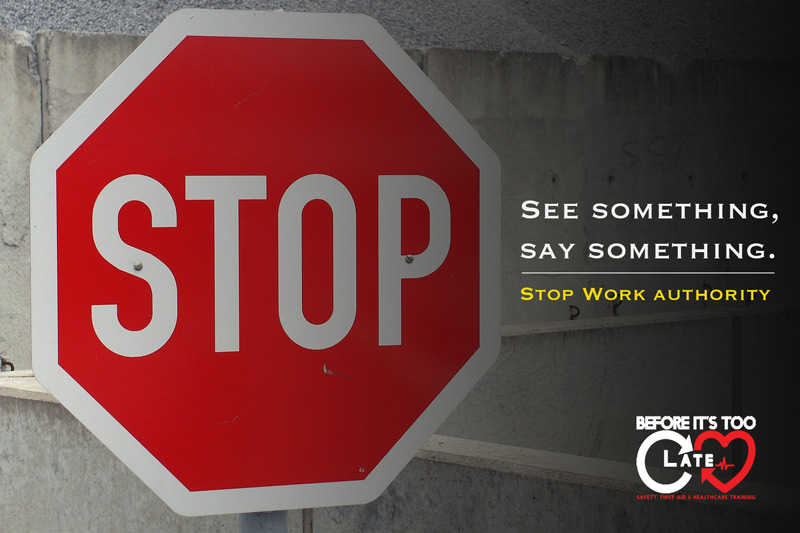
Simply do not tolerate working unsafely under any circumstance. Reward your employees when Stop Work Authority is utilized effectively. See how to effectively utilize Stop Work Authority in the link below.
Embed Safety as your #1 Value on and off the job. Our priorities change all the time, but our values are consistent with how we live our lives and complete our work.
Did this article help? We hope this toolbox talk was informative, helpful and easy to relate to. Please visit safetytalkideas.com and B42L.com to learn more about safety talks and topics.
When performing work, it is important that an employee feels empowered and is knowledgeable that he/she has the authority to stop work if an unsafe hazard is evident that prohibits the employee from conducting a task. Stopping work is, at times, a sensitive power depending on the industry. There are employees that are fearful to use this power. The lack of confidence that employees have to exercise this right can escalate a situation and make a situation worse than it needs to be.
Reasons Why Employees Hesitate to Use Stop Work Authority:
Fear of punishment from supervisor
Fear of conflict with other employees
Does not want to be labeled as a “snitch” or “soft worker”
Fear of losing job
Does not want to slow project or work down
Clearly, many of the reasons why employees hesitate to exercise stop work authority revolve around fear of losing something. One recommendation to feel more confident about using stop work authority is to review all hazards associated with your job and position with your Human Resources manager and explain any grey areas that might exist.
Despite what many employers and groups express or claim, stop work authority is not just a privilege, it is a responsibility. Your job as a safe employee is to be the first set of eyes and voice while on the clock. At the end of the day, stopping work can keep you, your coworkers, and your company safe.
“But Sam, it’s not that simple. I tried stopping work and my boss yelled at me and threatened to fire me.”
Unfortunately, some managers care more about how quickly a job gets completed than the safety of their workers. Many of these managers feel threatened or fearful that if one of their employees stops work, the higher ups in that company may think the manager does not have control over their group. This is not the case though! Your choice and ability to identify a risk or potential hazard can save a lot of harm, if conducted correctly.
Stop Work Abuse
As mentioned earlier, stop work authority is a power that comes with great responsibility. Many employers and managers have fears that employees may tend to abuse this power to get out of work. Because of this, it is important that safety talks be conducted prior to beginning a job or task to make sure all parties are aware of the potential hazards. Abuse of stop work authority can lead to reprehension and loss of job security. Be honest, be safe, and if you see something, say it.
How to Stop Work
If you see a potential hazard, risk or unsafe action, your job is to contact your direct supervisor or safety representative immediately. Also, alert any co-workers or employees that are assigned to the specific task as well. At that point, the manager or safety representative will analyze the issue and take corrective actions in order to resolve the issue.
Final Thoughts
All things considered, stop work is a crucial responsibility that employees should feel comfortable exercising. If there is a potential safety hazard that could cause an accident, the issue should be made known. Knowing the steps for how to stop work and who to approach is the first step of using this responsibility to create a safer work environment. If you have issues or fear of using such authority, contact your supervisor directly and your Human Resources team to make you feel comfortable in the workplace.
Did this article help? We hope this toolbox talk was informative, helpful and easy to relate to. Please visit safetytalkideas.com and B42L.com to learn more about safety talks and topics.
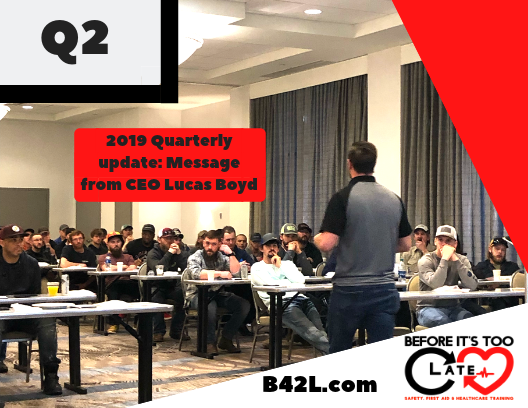
A message from Lucas Boyd, CEO. As 2019 hits its midpoint B42L is happy to report some exciting updates. B42L has teamed up with companies in the Plastics Manufacturing, Oil and Gas, Entertainment and metals industries. We have also been selected for an incredible award and are eager to share our news. Here is what we have been up to.
Pioneer Energy Services Round 2
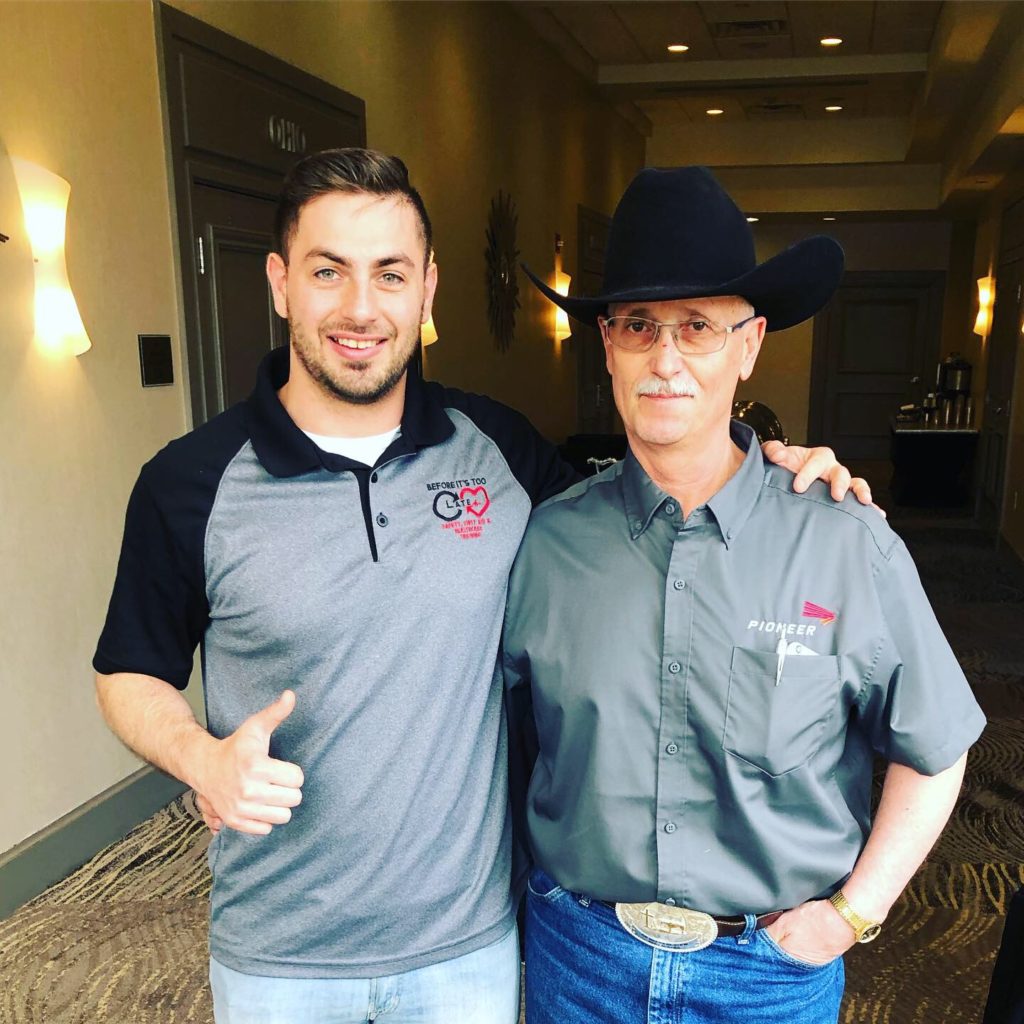
For the last four years, Before It’s Too Late has teamed up with one of the larger drilling companies in North America. Pioneer, based out of Texas, has more than 5 drilling rigs in the Utica/Marcellus Shale regions. These hard working individuals work round the clock for some of the world’s most prestigious operators. One of Pioneer’s biggest initiatives is the “Live Safe” initiative. This program involves practicing basic safety principles to keep workers safe on and off the job. Pioneer also incorporates training into this initiative.
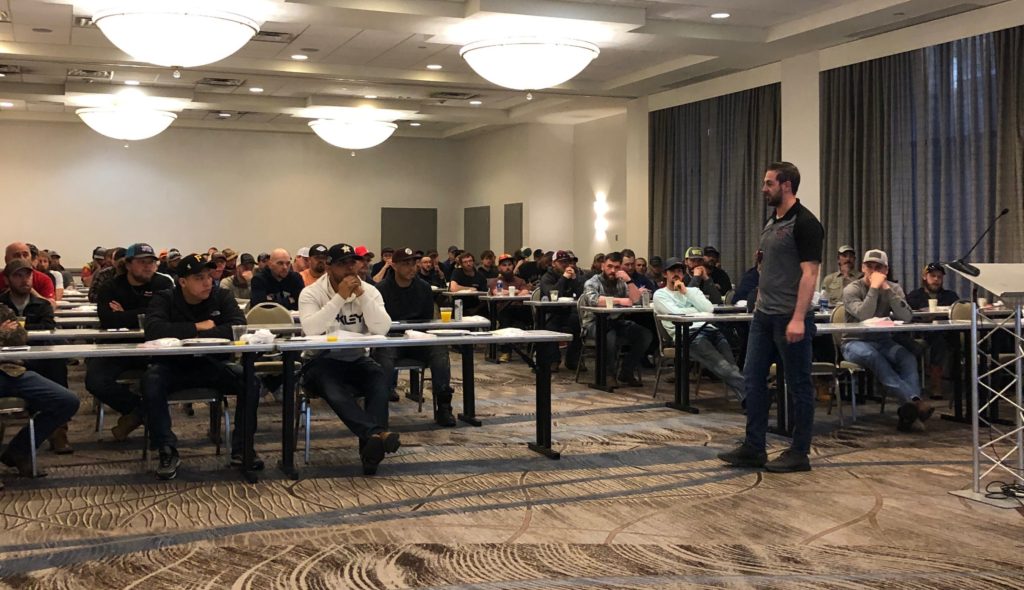
Before It’s Too Late LLC was called for the second time to train every single employee in the region in life saving skills. HSE manager TJ Potts helped coordinate a two day training to prepare over 140 individuals the skill set of response to Cardiac and First Aid emergencies. We tip our hat to such a wonderful bunch and look forward to continuing such a sound relationship.
Steel Plants are Rolling
Ellwood Quality Steels is North America’s most reliable producer of high-quality low cost steel ingots. The group has a passion for steel making and a passion for keeping their employees safe. Every two years, the group trains a larger group of personnel to be prepared in case of an emergency. It has been a blessing being able to team up with Slippery Rock Alumni in the organization’s safety department to get these classes executed.
Over the last quarter, B42L has worked to train of 60 employees in CPR/AED/First Aid. Check out the incredible video highlight of the first class back in February!
Entertainment and Private Businesses
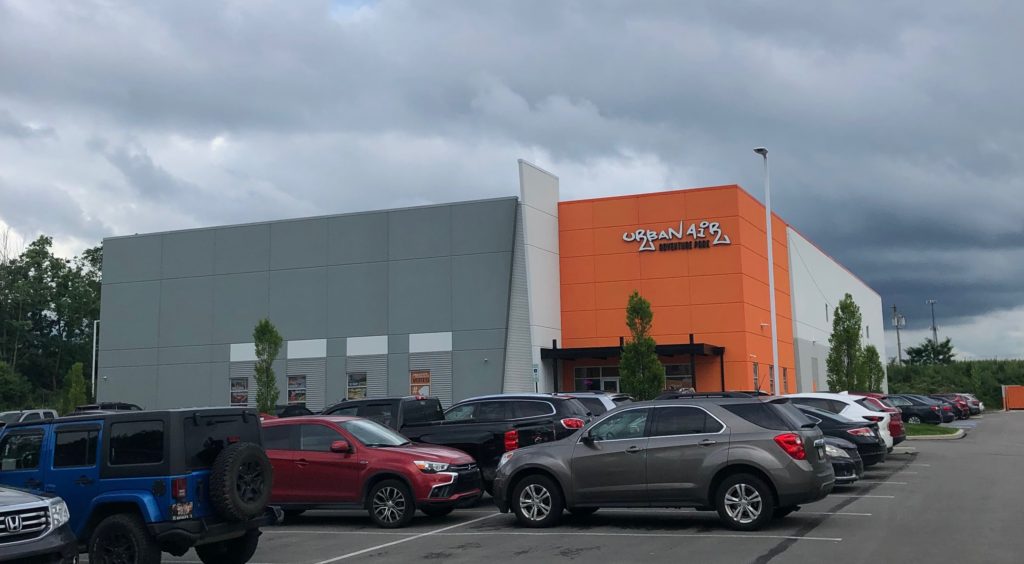
If you like to jump around or spend your time in the gym you will appreciate this update. Before It’s Too Late worked to provide multiple classes to one of Cranberry Townships most popular weekend activities for kids and families. Urban Air Adventure Park located in cranberry township provides indoor trampolines, indoor skydiving, a sky rider coaster and even dodgeball tournaments! This adventure land is full of fun for families and kids of any age and having a staff prepared for injuries is a priority for the group.
Urban Air Trampoline Park
Urbain Air spent diligent time preparing for an influx of visitors during it’s summer season by training team members in life saving skills. All together more than 20 individuals learned CPR/AED/First Aid and you can rest assure that your child will not only have fun, but be protected with skilled individuals on site!
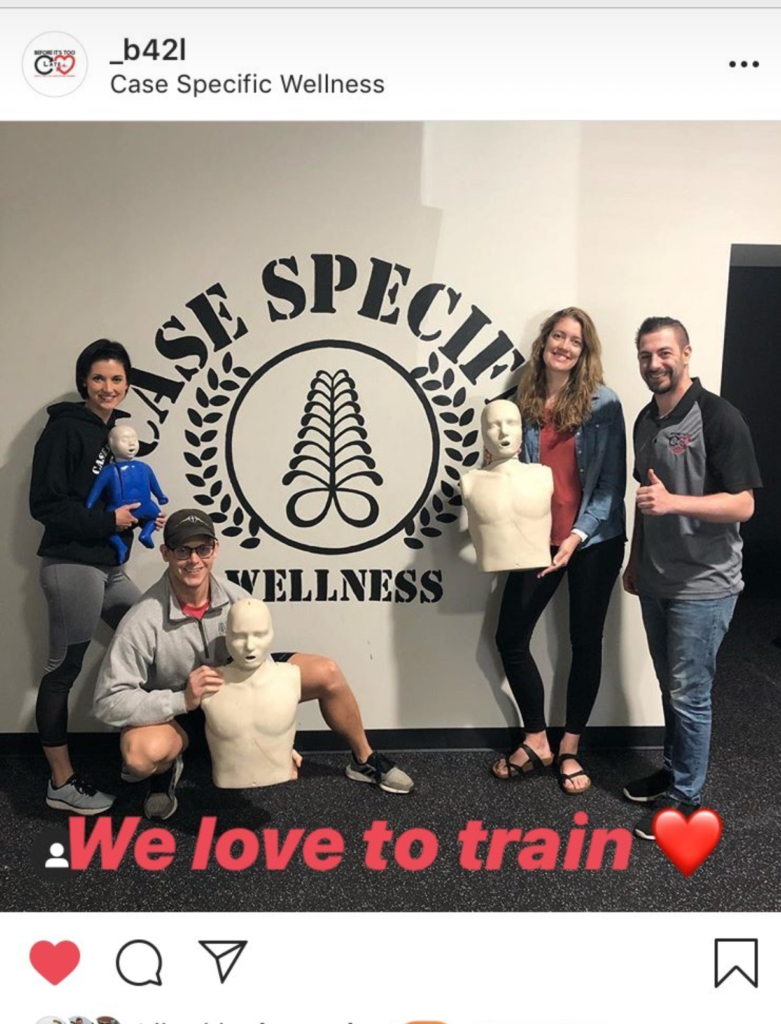
Case Specific Wellness leaders were all certified in CPR/AED/First Aid
Now if you are more inclined to get your exercise through fitness training and diet you will want to keep reading. B42L was invited to come train employees at Case Specific Wellness. This was coordinated by Head Strength Coach and Slippery Rock Alumni Jeremiah Rowe. Case Specific Wellness offer small group training classes, bootcamps, personal rehab programs and lifestyle coaching. One of the biggest reasons to choose them is because their coaches are educated to create changes to your physicality, mental toughness and are furthermore prepared for any emergency circumstance that could arise during your session.
Give them a look and you can feel confident that these coaches have your back!
Pittsburgh Business Times 30 under 30 Award Recipients
The Pittsburgh Business Times honors the 30 Under 30 award to businesses and nonprofits that successfully grow business, and make an impact on their community. Before It’s Too Late LLC is proud to be recognized for our efforts in making an impact on over 2000 individuals in business, the community and in the tri state area.
Award Ceremony to take place August 15th 2019
The official award ceremony is to take place August 15th and a full page article highlighting each recipient will be published in The Pittsburgh Business Times. Make sure to keep connected via linkedin and our other social media accounts for updates and please read and share this article!
Without our supporters, none of our success would be possible.
Other Training Updates
As we approach the 6 month mark of 2019, we look back at some other incredible groups we have trained.
Precision Drilling – Oil and Gas Drilling Company
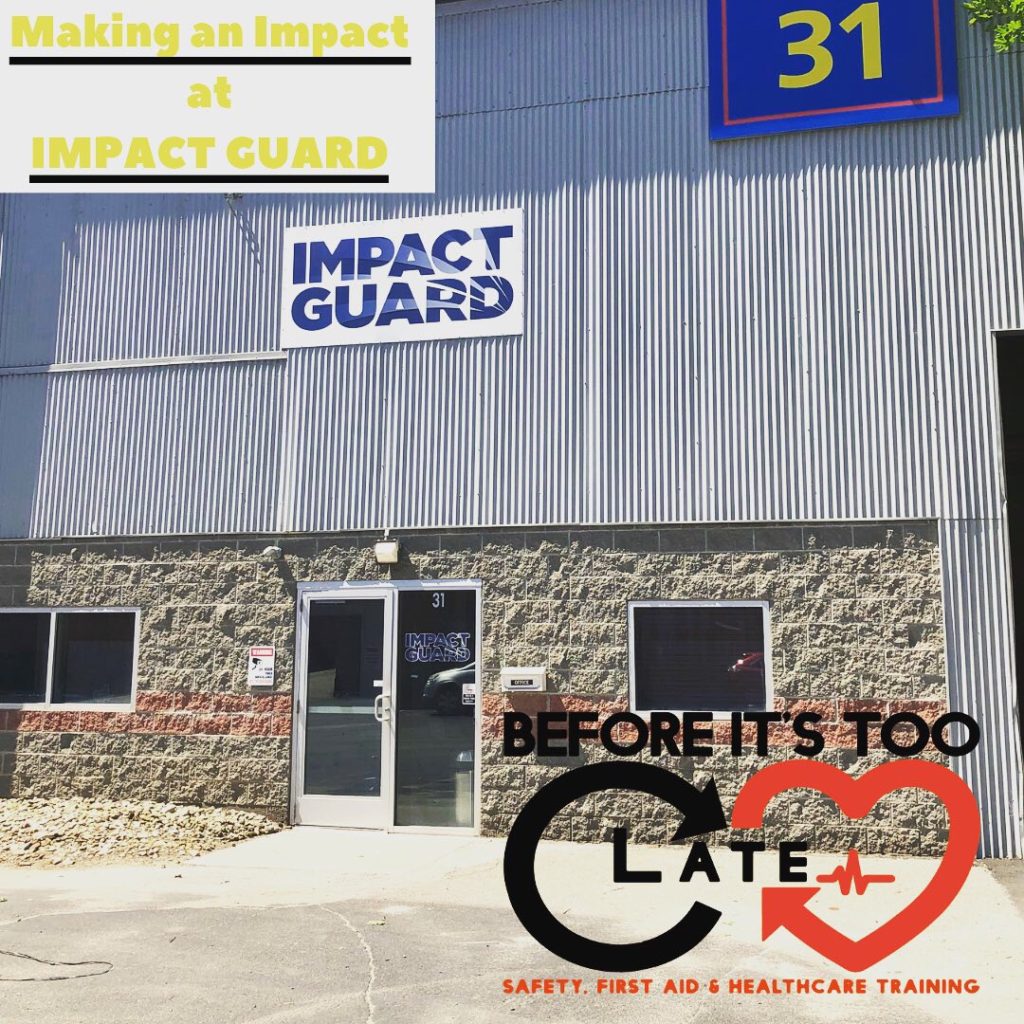
Impact Guard – Plastics Manufacturer
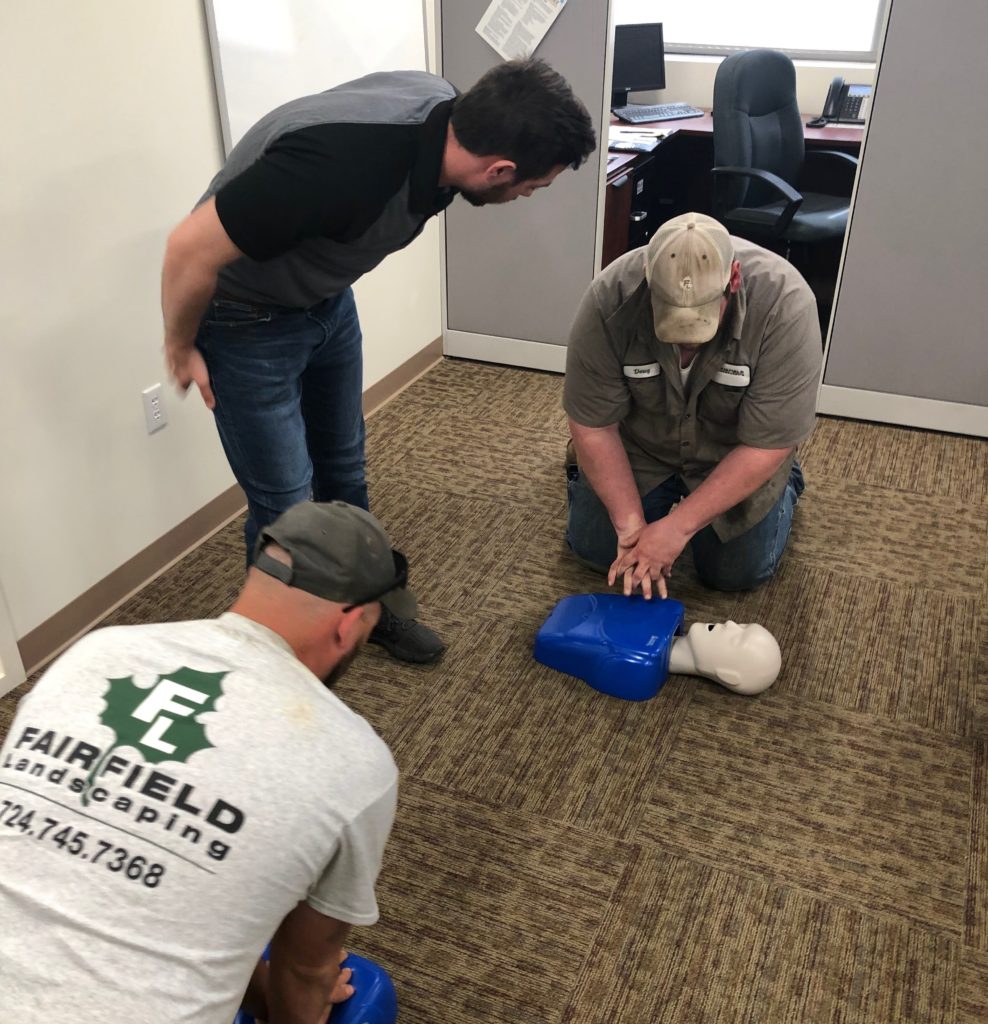
Fairfield Landscaping – Landscaping/excavating
ROC – Oil and Gas service company
Heavy Iron Oil field Services – Oil and Gas Equipment Rental/Service Company
North American Forge – Forge
Continuum Pediatrics – Homecare Nursing Agency
Fairfield Landscaping
Impact Guard
North American Forge
We are also full steam ahead planning for our return sessions to Slippery Rock University for the 2019-2020 school year. Take a look at our last year video highlights and if you are a student at the university, make sure to bookmark our page and register for classes as the school year approaches.
Was this helpful? Leave a comment and connect with us on social media or you can visit our website at www.B42L.com
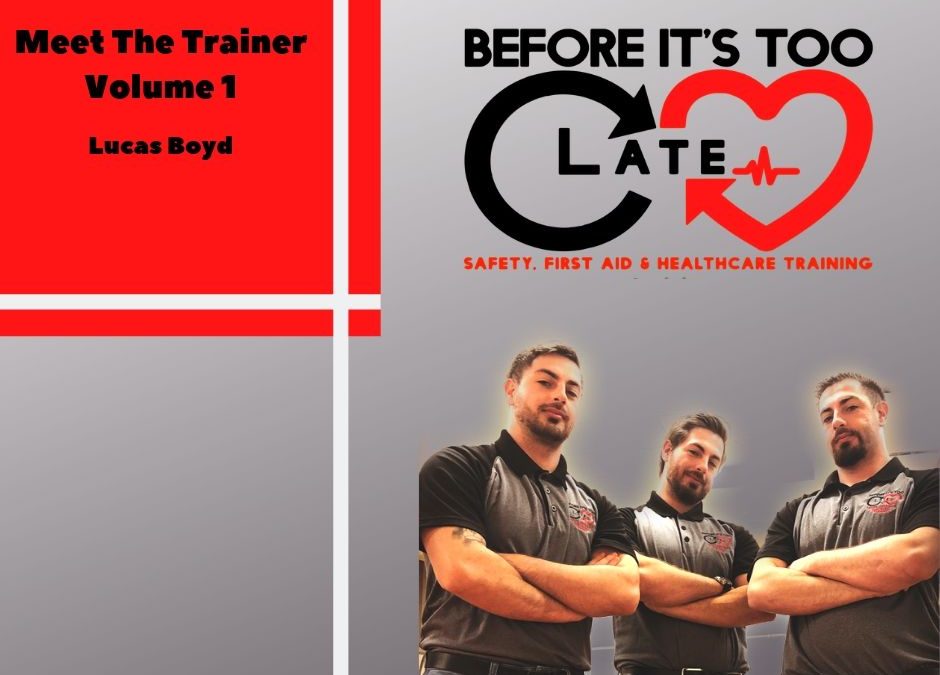
In 2016 Before It’s Too Late was founded by triplet brothers. We can understand that it may be hard to tell identical brothers a part from one another, so this 3 step blog series will introduce each trainer and you will quickly be able to see how unique and different each brother is. Each brother has a certain skill set and way of thinking.
Education
Lucas grew up in Pittsburgh Pennsylvania and attended Upper Saint Clair High school. Early on, he was interested in the biological sciences. That being said, Luke has always been known to have a creative side and was interested in joining after school art clubs, and played a few instruments growing up. Although he was not greatly skilled on his BC Rich Warlock electric guitar, he was an Xbox guitar hero guru. Luke has an appreciation for the arts and creative processes in addition to his love for science and math.
After high school, Lucas attended Slippery Rock University. He majored in Public Health and continued his studies and interests in the biological sciences. Luke has always been known to be a “numbers guy”. He enjoys math ,and running calculations in his head or on paper is a daily activity.
His inner nerd broke out when he was introduced to computer software programs at Slippery Rock. He was challenged to write mathematical functions and graphically tell stories with numbers. He graduated with his B.S in 2017.
Passion
Have you ever been asked “What keeps you up at night”? Or “What makes you tick”? These questions are often synonymous with “What is your passion?” Luke has two short answers to those questions.
Helping people and problem solving
Telling Stories
Now passion and interests are two totally different things. If you wanted to know his interests, we could go on for a while talking about superheroes, star wars, and lifting weights. Lucas is the youngest of the triplet brothers and the 5th child of 7 in his family. He has always been one to love work and starting conversations.
“I just really enjoy making people better. I have a purpose to interact with others and hopefully make their day better. I think the biggest joy I look to receive is by helping other people WIN. If I can help someone win on a daily basis, I know I have done my job”. – Lucas Boyd
Career
They say the average person has about 10 jobs before they find their niche in a career field. Well, Luke hit that number before he really graduated from college. Luke began working while he was around 12 years old at his father’s warehouse facility. He began working by packaging power tools on the weekends with his brothers and father.
He has always been fascinated with processes of businesses and trying new things. After his warehouse days he washed dishes, was a line cook, and even worked his way up to being a side cook at a fine dining restaurant. During high school and college he helped run a multi level marketing business, worked at a retirement facility and was a home health aid for a pediatric nursing company. He has had a slew of other jobs but those are just a few.
“I am always interested in trying new things and earning my way. I have always held positions where I am able to help others, and make an impact on their lives. I couldn’t picture a position where I wouldn’t be directly interacting or helping others. And if I were in a role like that, I’m not sure I would enjoy it much”. – Lucas Boyd
Throughout college, Luke would come home in the summers and work in the oil and gas industry. He was part of a containment company that helped construct, service, and tear down oil and gas sites for drilling and completion operations. He fell in love with the industry and was also encouraged to practice safety on the job every day. The oil and gas industry has come a long way and because there are so many operations going on at once, working safely is a main priority.
Starting B42L
Part of the public health degree curriculum involves behavior based change and environmental/occupational safety. Luke was inspired to use his knowledge in the classroom and his growing work experience to help start Before It’s Too Late LLC. He and his triplet counterparts founded the company for many reasons. One of those reasons was to help educate and improve working conditions, and overall safety in the industry.
A good quote he lives by is “You don’t know what you don’t know.” This quote is a constant reminder to Luke that helping educate others on emergency preparedness, safety/public health topics sometimes isn’t as obvious as you may think!
Again, that quote you can apply to just about anything, “You don’t know what you don’t know.”
Healthcare
After graduating college, Luke interned and received a full time offer to work at one of the largest health insurance providers in the country. He worked in a special investigative unit and was part of a team that investigated fraud, waste, and abuse in the healthcare industry. He was challenged to perform some intense audits, manipulate and mine data, and utilized critical thinking skills to find root cause of issues that were impacting the customer and the organization.
A lot of his time was spent writing formulas, creating charts and graphs and following up with hospital units to explain problems. Furthermore he was in charge of correcting mistakes and recovering misappropriated funds. In addition to his auditing role, he was also empowered to help on board and lead future team members and gave presentations to the community members he served.
Lucas helped deliver presentations about the opioid epidemic to high school students in the tri-state area. He helped coach those individuals on how to recognize and respond to crisis situations related to drugs, and first aid.
Back to Oil and Gas
Lucas returned back to the oil and gas industry in 2019 for a more client facing position and currently is a territory manager for a chemical/lubricant solutions company. He solves problems every day and works to provide environmentally friendly solutions to the industry.
He currently is on the road just about every day helping save his partners time, money, and resources. His background in containment and safety has paid off resulting in a relationships that are rooted in trust, communication and actionable results.
“Working in this industry has allowed me to meet so many great men and women. I have the opportunity to solve problems on a daily basis and I am able to serve others while providing value. I get to do all of this while working in one of the coolest industries you could ever imagine.” – Lucas Boyd
Fun facts about Luke
To wrap up this edition of meet the trainer we will leave you with a few fun facts about Luke. We trust that you have a better feeling for who is part of the team over at B42L and hope this gave you some insight of the experience level and personality he brings!
Favorite musical artist – ACDC
Favorite book – “The Art of the Deal” – Donald Trump, or “Crush It” – Gary Vaynerchuk
Favorite superhero – Superman
Go to ice cream flavor – Peanut butter and chocolate
Podcast to listen to – The David Ramsey show
Favorite sports teams – Steelers or Pirates
Favorite season of the year – Fall
Nike or Adidas – Under Armor
Weekend activities – spending time with the family, working out, movies
Favorite craft brew – Anything from Southern Tier Brewing Co.
This edition of Meet the Trainer was intended to showcase the talent at B42L while also highlighting the trainer while he isn’t helping save lives. Stay tuned for further editions and make sure to reach out to B42L.com for your training needs! – Before It’s Too Late
Heavy Iron Oilfield Services has been providing the great Marcellus and Utica Basin assistance since 2011. The group has their hands and Iron in a few different segments of the oil and gas industry and has operations throughout the Western PA, Eastern OH, and WV areas.
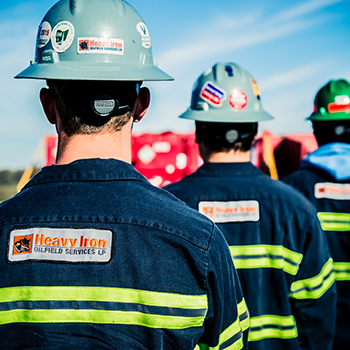
Heavy Iron provides superior value to the energy industry and has a quality workforce lead by an incredible management team. HSE Manager, Cody Montgomery is leading the charge by providing safety training to all of his employees and leveraging B42L’s services to get the job done.
Currently Heavy Iron provides the following services:
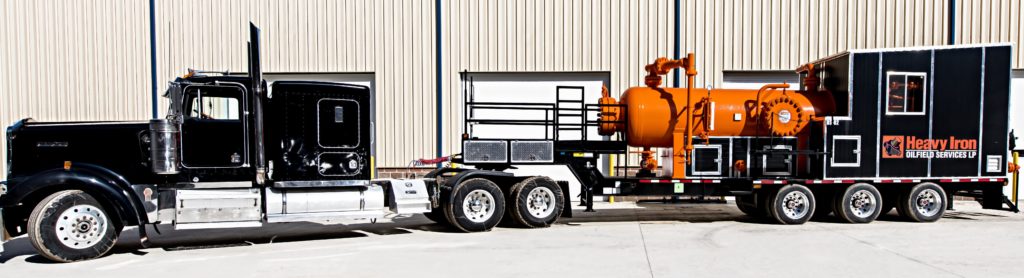
Flowback/ Well Testing
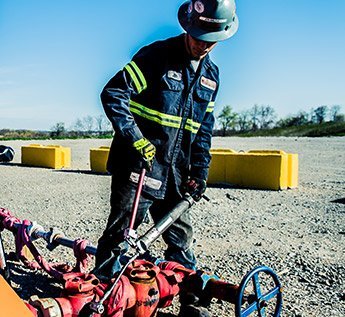
Valve Greasing and Hydraulic Torque Wrenches
Hot Shot hauling Services
Roustabout Services
Equipment Rentals
Check their website out to inquire how Heavy Iron can do some incredible work for you!
Heavy Iron Oilfield Services is dedicated to providing reliable manpower and equipment to maximize the safety and potential of every production site. All of their pressure vessels are built to ASME standards and ALL employees are Safe Land certified.
If you are new to the oil and gas industry, safety has been an increasing topic of discussion. Mitigating risk and increasing efficiency is every companies dream. This can only be met by ensuring all staff members are not only competent but leaders in safe industry practices.
Safety has a benefit to employees, job sites, and a bottom line. Lack of safety can not only jeopardize workers and equipment, but also production goals and operations as a whole.
Bottom line, Working SAFELY is the best way to get the job done!
Training First Aid/CPR/AED
Over the last decade, operators have experienced far too many occurrences of accidents and incidents on job sites related to First Aid. With new techniques of fracking developing and an influx of working demands, being trained in First Aid and how to administer CPR and use an AED is imperative.
Operators are slowly making “prerequisites” of training standards prior to stepping on pad. That means the men and women who work in this industry are being championed how to recognize and respond to emergency situations.
In the Western PA, OH, WV regions, job sites are often located in remote and hard to reach areas. That means in the event of an emergency, response time is often long and there is a demand to have a staff that knows how to respond.
Certified and Ready to Work
Heavy Iron Oilfield Services has utilized Before It’s Too Late LLC for its CPR/AED/First Aid needs for 3 years. HSE Cody Montgomery has leveraged B42L’s capabilities to train his staff so he can focus on being in the field, and deal with day to day safety requirements.
Having a staff that is routinely trained in these skills not only hits requirements, but helps employees grow. B42L’s staff has years of experience in oil and gas and relates the skills being taught to every day operations in the field. This makes learning more sensible and relatable. The most recent class B42L had the pleasure conducting was for new hire staff members.
The class focused on delivering certifications from The American Red Cross in the following skills and topics:
Recognizing and Responding Cues
Cardiac Emergencies (Heart Attacks and Cardiac Arrest) SKILL
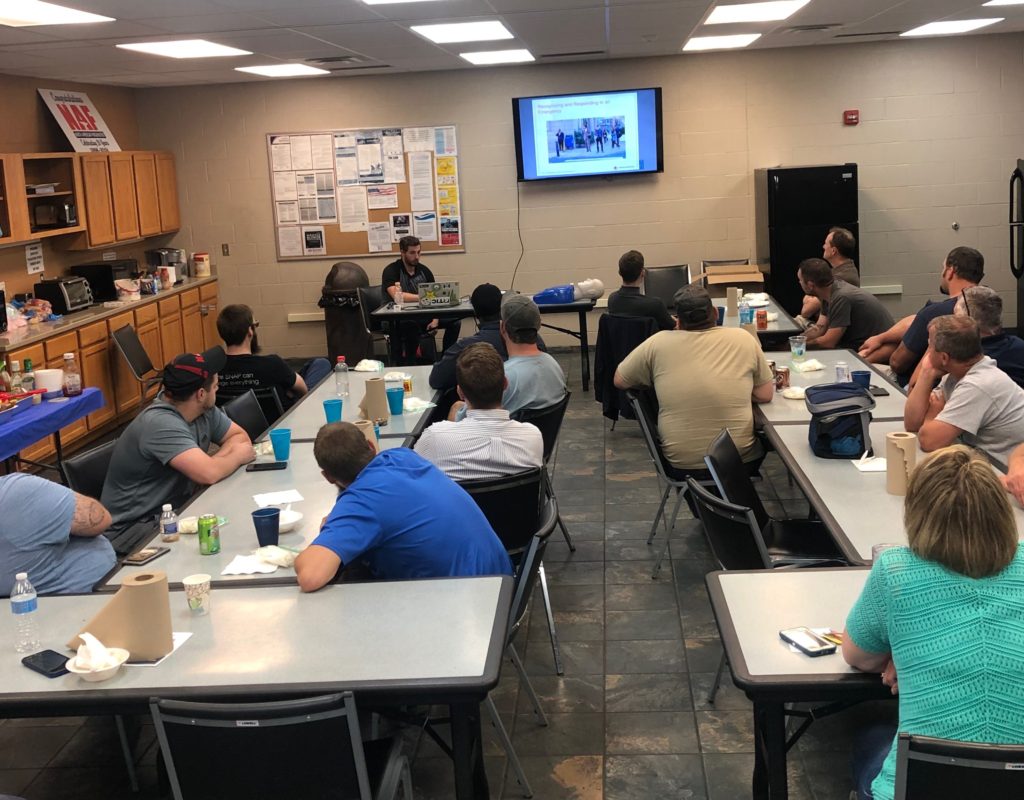
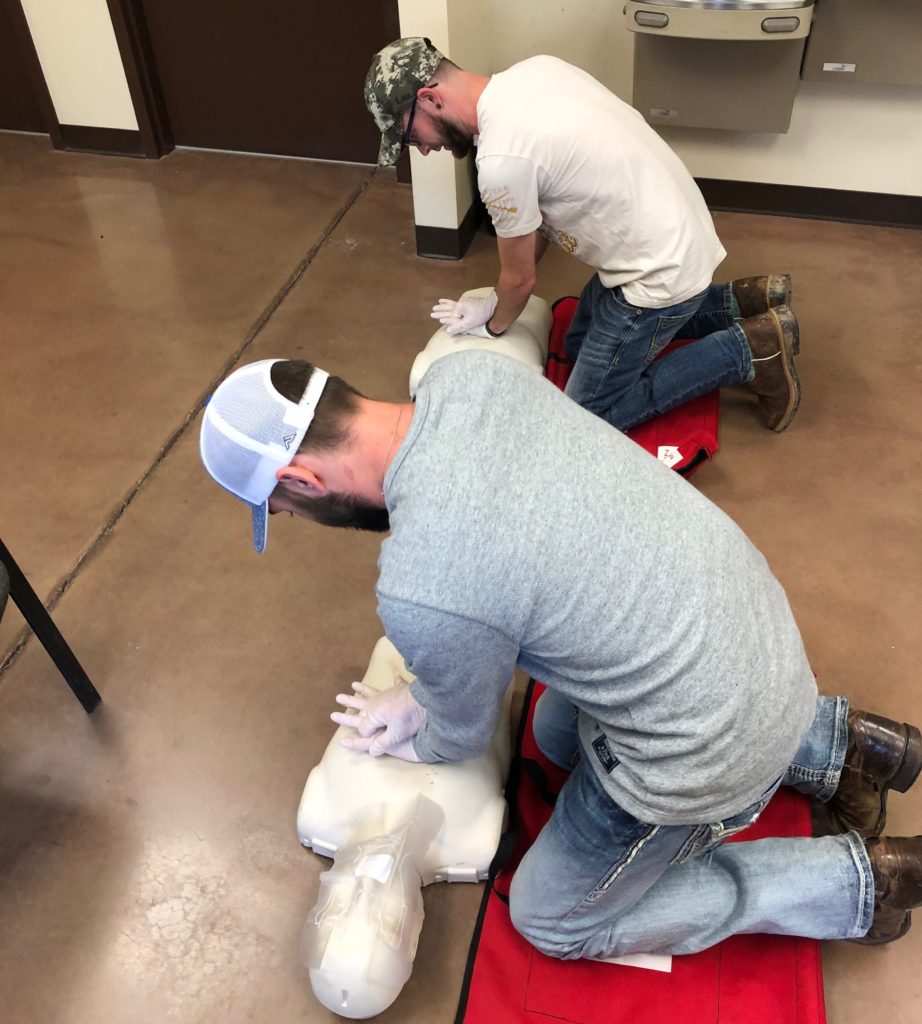
All members were placed through a lecture style course that had open communication about these topics as well as a fully integrated skills portion allowing participants to practice simulated Real Life Scenarios.
SRU Connection 03
Before It’s Too Late takes pride that all of its staff members are graduates of the highly respected Slippery Rock University. Slippery Rock has a Safety program that is second to none and individuals who matriculate from the program have contributed and lead various industries.
HSE Cody Montgomery is also a graduate of SRU’s Safety Management program and has other certifications including: OSHA 30 – Hour General Industry, OSHA 30 – Hour Construction Safety, Confined Space Trainer. Cody has experience consulting in the industry and has utilized his background in safety and in the oil and gas industry to improve working conditions, increase efficiencies, and have an overall impact on the customers and individuals he serves.
B42L is proud to work with Heavy Iron and Cody and welcomes all other graduates to inquire about what Before It’s Too Late LLC can do for you!
Have you ever had a bad coach? Think back to middle school or high school. That coach that constantly barked orders, never listened, and rarely if ever, showed you the proper way to do things left a bad image in your mind. Was that relationship beneficial for you? Most likely not.
As a Safety Professional one of your primary functions is coaching employees on safety practices and procedures. Let’s discuss what coaching is, the benefits of coaching, the proper way to coach, and how to avoid becoming your old high school football coach that you have etched in your mind every time you hear the word coach.
What is Coaching?
Coaching is the act of observing and engaging individuals regarding their actions and behaviors, in order to achieve a desired behavior. Remember, a good coach does not simply throw his starters into the game and wish them luck. It is YOUR job as a coach and safety professional to guide, teach, motivate, listen and directly express the overall end goal.
Why Coach?
Coaching is a type of positive reinforcement (giving praise to someone for taking a desired action). Positive reinforcement is statistically proven to produce a more engaged, and positive workforce. Changing behavior is one of the most challenging tasks a safety professional has. Coaching allows you to engage your workforce in a positive manner, and produces an open communication between field employees and management.
Benefits of Coaching Safety
Empowers individuals and encourages them to take responsibility.
Increases field team and management engagement.
Improves individual performance.
Helps identify both company and individual strengths and development opportunities.
Helps to motivate individuals.
How to Coach and Engage Your Field
Coaching itself is actually very simple but it’s not always easy to do. Personalities, time pressure, and relationships can all come in the way of coaching. Keep reading for the steps of how to coach.
Steps of Coaching
Let’s outline a good way to coach an employee:
Observe the action being performed.
When you see the opportunity for improvement, professionally engage the team member.
If the action or condition is unsafe, Stop the activity using Stop Work Authority if needed.
Explain what you observed in a positive, respectful, manner. Be objective and explain the facts. Avoid using accusatory phrases such as “ Why were you, (insert action)?!”
Try to utilize phrases such as, “Hello John, you have been doing a great job with your day to day tasks. I observed you performing (insert undesired action). Can you explain why you were doing it this way?” I was looking for some clarification on the proper way how to perform the task and could use some help”.
Listen to the individual’s feedback. Often times, hazards are simply overlooked or not identified, resulting in unforeseen unsafe acts.
After listening, thank them for their input. Next, provide the desired behavior using coaching. Explain the benefits of using the safe alternative. As example: “Sure it may take 5 extra minutes to perform that safety check, however that safety check could be the one thing that prevents an incident from occurring.”
Get confirmation from the employee that you have both agreed that the next time the task will be performed, it will be the safe way.
Observe the next time the individual performs the task if possible. Be sure the individual understands you are coaching and not throwing around orders.
Coaching requires willing participation by both parties; be sure the individual you are coaching is properly engaged and understands your intentions. Get to know your people, find commonalities, and utilize different approaches for each individual.
Overcoming Objections
Coaching rarely goes over as smoothly as we just illustrated. As a safety professional, you want to avoid the stigma of “It’s my way or the highway!” Here is a great way to think about this problem:
2+2=4
1+3= 4
Just because an employee is not doing it “your way”, does not mean it is necessarily wrong. (Unless there are specific Standard Operating Procedures (SOP) or a Policy/Regulation stating otherwise). Often times the best solutions come from the field. Listen to their feedback. The employee may actually teach you something and provide a safer solution than the current set of procedures.
Avoid Saying These Phrases
Delivery is important when providing coaching so avoid these phrases when you are coaching.
“It’s not me telling you this, its just our policy”.
You lose all credibility as a safety professional when you say this. Rather than rolling over to a bad policy, bring up the concern to management if there is a policy/procedure that is not successful and find a solution together.
“It’s o.k. just be careful”
Again, your credibility as a safety professional is shot. You may have saved some face and the field may like you for not enforcing the rules, but when someone gets hurt or something goes wrong, the blame is now pointed to you for making the call to not enforce the rules.
“What are you stupid?”
Pointing blame at someone for acting unsafe is not beneficial to anyone. Often the employee was simply unaware that what they were doing was unsafe. There is an old saying, “You don’t know, what you don’t know”. If the employee is experienced and in fact is aware the action is unsafe, simply explain the consequences of what could happen. Let them know you care about them enough to not let them put them self at risk. Explain that you both have a common goals of everyone going home safe to their family after work ends.
Providing Feedback
The final step of coaching is providing feedback. If you are not showing appreciation for the change in behavior, you can be certain that the employee will fall back in to their old habits. Giving praise can come in a few different forms such as:
Individual praise
Group recognition
Picking up lunch for the crew for following safety procedures
Hats and tee shirts also go a long way when giving praise
Hand writing a letter for recognition
Spotlighting the employee’s efforts at company meetings
etc
Not everyone responds to feedback the same way. Some people would prefer to not be recognized in a group setting, so let the person know how you would like to recognize them before doing so.
Final Thoughts:
Coaching is an ongoing process and it takes time to change behavior. When coaching safety in the workplace make sure to explain the facts, and potential outcomes of each action taken. Follow up with employees and acknowledge when a task is done correctly..
Did this article help? We hope this toolbox talk was informative, helpful and easy to relate to. Please visit B42L.com to learn more about Coaching Safety and other Safety Topics to improve your company’s safety culture.