Oct 11, 2018 | Health, Professional, Safety
You ask yourself these questions every year
Will I get sick?
Do I really need to get the flu shot?
You also justify your thought process because of the similar case below:
My uncle Terry told me he doesn’t vaccinate his kids against Influenza because vaccines cause Autism and Cancer!
It is very normal to ask yourself these questions. It is also extremely relatable due to the simple fact that we all have an Uncle Terry in our lives. The answers to your routine questions are provided below:
What is the Flu?
The word “Flu” is an abbreviation for Influenza. Furthermore, Influenza is known to attack the respiratory system and cause illness. According to the CDC, most cases of the flu are not deadly, but some cases can be life threatening and, in some cases, kill the host AKA YOU. That being said, lets answer a few questions you have about the flu and understand the importance of vaccinating against the virus.
There are four types of flu viruses: A, B, C, D. The Human Influenza A and B viruses cause seasonal epidemics of disease in the winter months almost every year in the United States. The C and D viruses do not generally cause epidemics, so we will focus on A and B viruses. Both A and B viruses can be broken down into different strains.
Each year “experts” make the best prediction of which virus will emerge and a vaccine is made in effort to prevent the flu from attacking. These Viruses are furthermore named and a naming structure was accepted by the international community (World Health Organization better known as the WHO) in 1979. The flu typically is transmitted by droplets made when people cough, sneeze, or talk. The droplets are inhaled into the lungs and the virus gets to work multiplying itself.
What Are the Common Signs and Symptoms of the Flu?
The influenza virus has very clear signs and symptoms. Here is a list of the common signs and symptoms that the flu virus may cause:
- Fever
- Cough and sore throat
- Body and headaches
- Chills and fatigue
- Vomiting
- Loss of appetite
Although a fever is a common sign and symptom, it is important to know not all cases of the flu will show a fever.
Is the Flu the Same Thing as a Cold?
A cold is a mild respiratory illness that is less severe than Influenza. The common cold normally beings with classic signs of a sore throat and a runny nose. Colds normally last a week in duration but can develop into sinus infections or worse if untreated. My mom always rattled this saying to me when I was facing a cold as a child.
- 3 days coming
- 3 days staying
- 3 days leaving
This motherly DIY diagnosis was a quick and easy way to let me know, that the tissues would only be required for a few more days. It was also important for her because if my symptoms did not get better, than she would need to make a trip to our family doctor or local Med Express.
Although my mother is a nurse, I just want to point out that this was her motherly way of helping me through the common cold and not a medical diagnosis. If your symptoms are getting out of hand, make sure you get checked out and evaluated.
How Can I Fight the Flu?
This is the important part of our discussion. Yes, you can protect against the flu and there are preventive measures. Although nothing is 100% effective, you can dramatically reduce your risk for contracting the illness. Here are a few steps:
- Get a flu vaccine – We hate to break it to uncle Terry, but it has been proven that the flu vaccine does not cause any type of cancer or autism. The CDC reports that the flu vaccine protects against the viruses that are most common each flu season. Vaccinations are extremely important for individuals younger than 5 years but older than 6 months as well as adults above 65.
The higher risk populations also include pregnant women and residents of nursing homes.
- Preventative actions that reduce the spread of germs – These steps are the simple things we know and sometimes ignore. During flu season you should wash your hands regularly, cover your nose and mouth when you cough or sneeze, and avoid touching surfaces that many people are also touching (door knobs, handles, railings)
You should also make it routine to clean and disinfect surfaces and objects that could be contaminated by germs and avoid close contact with sick people.
The use of PPE or Personal Protective Equipment is important. PPE examples include breathing masks, gloves and other forms of sterile barriers that reduce the risk of infection and spread of disease.
- Listening to your doctor – if you do happen to get the flu, listen to your doctor. You may be prescribed antiviral drugs. Antiviral drugs are different than antibiotics and are not available over the counter.
Can I Die from Influenza?
Remember, we did mention that most cases of the flu are not going to kill you. That being said, the CDC still keeps us up to date with the over all tracking of hospitalizations and deaths that Influenza inevitably causes.
Since 2010, there has been around 36 million illnesses associated with the virus. Additionally, the CDC reports there around anywhere from 12,000 to 56,000 deaths per year associated with the Influenza Virus.
Side Effects from the Flu Vaccine:
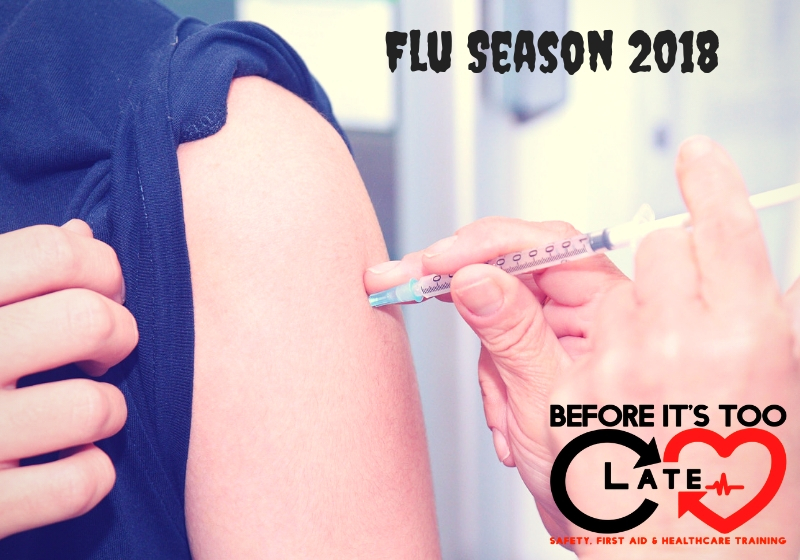
Because the flu vaccine is typically injected via needle, you may experience a few side effects. It is very common for individuals to have a sore upper arm and in some cases you may experience achiness and a small fever. Nonetheless, the 2 second sacrifice provides you with great preventative consciousness and you could even be walking out of the doctor’s office with a Star Wars bandage!
Should I get vaccinated for the Flu 2018-2019?
The short answer is YES. You should get vaccinated. The expression, “Better safe than sorry”, best describes the risk behind not becoming vaccinated.
Reasons to get the Influenza Vaccine:
- Contracting the flu virus can cause illness and in some instance’s death
- If you contract the flu virus, you risk spreading the virus to others
- When you contract the flu virus, you may have to miss out on: work/schooling/daily activities
- Getting the flu vaccine reduces the risk of flu hospitalization, which holds financial ramifications
Where can I get the flu vaccine?
The flu vaccine has become increasingly more accessible. You may be able to obtain the vaccine from:
- Primary care physician
- Local pharmacy
- Onsite work or school related clinic
If you do not have access to these resources, I strongly encourage you to log on to the HealthMap Vaccine Finder tool. This tool allows you to plug in your zip code and provide addresses and facilities that offer the vaccine. They also provide directions, website information and allow you to plan your trip via Uber!
https://vaccinefinder.org/?address=15241#
How much is the Influenza Vaccine?
One of the biggest health disparities associated with participating in any type of medical care is cost. Unfortunately, people are very quick to roll the dice and bet on not contracting the virus.
The good thing is, it is very common for health insurance plans to cover vaccinations and most of these costs are built in to your healthcare coverage. If you are paying out of pocket for your vaccination, most vaccinations range from the $14-$40. Taking the preventive step and cost for vaccination is the wiser decision because like we previously mentioned, Influenza has associated financial consequences.
When you decide to get the Influenza vaccination, you are reducing the risk of obtaining the virus. Consequently, you are also reducing the risk of: hospitalization, antiviral drugs, lost compensation due to missed work and much more. The few dollars you spend will inevitably save you money in the long run.
I Don’t Like Needles
Unless you are someone who likes pointy objects penetrating their skin, I think it is safe to say we all don’t particularly have an affinity for needles. There is more good news about the flu vaccination. The vaccine can be provided in another form: the nasal spray. Make sure you consult with your healthcare provider to determine which vaccine is best suitable for you.
The Big take away:
- Influenza is a virus that affects human’s respiratory tract commonly in the winter months
- Influenza and the common cold are different from one another
- In some severe cases, you could become hospitalized or die from the flu virus
- You should get vaccinated for the Influenza Virus
- There are resources that provide the Flu vaccine that are affordable
Was this helpful? Leave a comment and connect with us on social media or you can visit our website at B42L.com
Resources for more information:
B42L.com

Sep 12, 2018 | Professional, Safety
As a safety professional there are dozens of directions you can take your career after graduation. There are routes in healthcare, construction, manufacturing, oil & gas, insurance, food safety, retail safety, cyber security, or government employment opportunities, just to name a few.
In order to truly excel as a safety professional, it is important you find out which direction best suits your passions. Because let’s face it, if you aren’t fully invested and passionate in the industry you are practicing in, it is easy to lose motivation or second guess the profession as a whole.
Today, we are going to discuss 3 ways to strengthen your resume if you so choose to change directions in your career path. These efforts will make your resume stand out among your peers, and make you a more attractive candidate to potential employers.
1.) Accreditation
If you graduated or are graduating college with a degree in Safety Management/Safety Science, check to see if your program is recognized through the Board of Certified Safety Professionals (BCSP) as a Qualified Academic Program (QAP).
One benefit of graduating from a QAP, is the ability to apply for GSP (Graduate Safety Professional) designation. Becoming a GSP puts you on track for CSP (Certified Safety Professional) designation. In safety terms, the CSP is “a pretty big deal”.
CSP designation not only correlates to a traditionally higher salary, but it also verifies to employers that you are at the top of the line of potential candidates. Some companies will require CSP designation and won’t even consider resumes without accreditation. Point being, when you are selecting a school or graduating, keep an eye out for QAP’s. The return on investment is well worth it in the long run. For more information on the BCSP and the accreditation process, head to www.bcsp.org.
2.) Certifications
Do you want to increase the likelihood of securing that dream job but don’t know how to stand out against other applicants? Apply for a certification.
Applying for certifications not only gives you an added skill, but it shows employers you can provide focus-based value in areas that may benefit the company. If Candidate A and Candidate B both graduated college with 4.0 GPA, both have limited work experience, and both have club/organization involvement, getting a certification could be the difference of landing that job interview or not.
Some university curriculums have certifications built into the program. If they don’t, you’ll want to go out on your own and get a certification that can differentiate you from your peers. Keep in mind, if you list a certification on your resume, you better be able to produce that certification come interview time. Yes, employers check.
Make sure you stay current and up to date on your certifications you already have, because some do expire. If you do decide to make that career change, we’ve listed some certifications below that are somewhat universally valuable, and won’t break the bank.
3.) Continued Education
As the number of students graduating college with a Bachelor’s degree continues to grow, it is becoming increasingly more competitive in the job market.
The Bachelor’s degree is becoming equivalent to a high school diploma, and a Master’s Degree is becoming the new norm. If you want to strengthen your resume against your peers, continued education may be the route for you. Universities are developing fast-tracked programs that make it easy to graduate with a Bachelor’s and Master’s degree. In some cases they can be completed in as little as 5 years.
With more and more universities offering online programs, consider studying for your Master’s degree at night after your day job. Some employers will offer tuition reimbursement for continued education as you are increasing your knowledge to enhance their safety program.
Make sure to ask your company’s human resource department if the company offers a tuition reimbursement or assistance program. You may get that degree at a discounted rate thanks to your employer.
Consider Master’s degrees in:
- Safety Management/Sciences
- Business Management
- Chemistry/Industrial Hygiene
- Physics
Final Thoughts
As the job market continues become more competitive, it is imperative you take a proactive approach in your career. Being able to diversify yourself in a competitive market will allow you the flexibility and leverage to jump about the robust disciplines of the safety world. Obtaining accreditation, gaining certifications, and pursuing continued education are all routes that will help you transition in and out of career paths to help you find your passion in safety.
Did this article help? We hope this toolbox talk was informative, helpful and easy to relate to. Please visit B42L.com to learn more about strengthening your safety resume and other safety topics to improve your company’s safety culture.
Sep 5, 2018 | Professional, Safety
What is a workplace accident?
A workplace accident can be defined as:
“An unfortunate incident that happens unexpectedly and unintentionally while on the job, typically resulting in damage or injury.”
After an accident occurs, an investigation often ensues to figure out why the accident took place. Preventative actions are then put in place to avoid another occurrence of the same accident.
Below are some key areas to focus on when performing an accident investigation to help improve your company’s safety culture and performance.
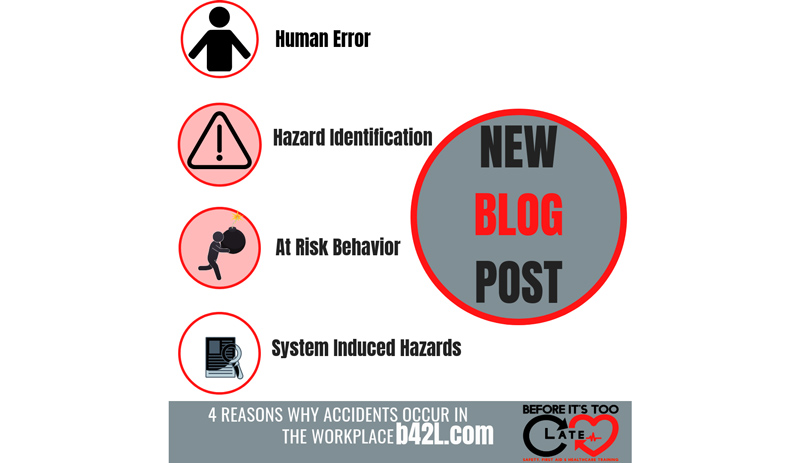
1. Human Performance Tools
Human Performance Tools (HuP) refer to an operating philosophy explaining that people are fallible and make mistakes. Human Performance aims to create tools that individuals can utilize on a daily basis to strategically reduce the amount of mistakes that are made.
Here’s an example:
It is 6:30AM, and you are rushing to get to the office. You stop by a gas station to fill up, knowing it takes about an hour to get to your office with traffic. As you arrive to the fuel pump, you answer a phone call, and simultaneously begin to select your fuel and pump your gas. After filling up, and hanging up the phone, you look at the final price of your purchase on the receipt that was printed out. The price looks unusually different from previous experience. After further detail of the receipt, you discover that you had selected the incorrect fuel and now must call a towing company to have your vehicle towed to have the system flushed. A costly trip to the gas station could have been prevented had you been utilizing Human Performance. A simple self-check at the fuel pump before squeezing the handle could have saved you thousands of dollars, and you would have been to work on time.
Although this example is simple, this exact scenario happens every day. By utilizing Human Performance Tools, this error can be prevented.
2. Hazard Identification
Identifying and acknowledging hazards in the workplace is a proactive approach to minimize the risk an accident will occur. By identifying hazards before work begins, you can plan barriers and defense strategies to ensure no injury/damage occurs. Hazard Identification often takes place during a Pre-Job Safety Meeting and is documented on a Job Hazard Analysis (JHA).
During these safety meetings, the work to be performed is outlined step-by-step with corresponding hazards. Outlining the barriers and defenses to prevent a hazard is the most important part of the JHA. During these Pre-Job Safety Meetings, employees can share individual input and agree what the safest course of action to take will be.
3. At-Risk Behavior
Taking chances with safety is not a strategy for success.
Time and time again, it is proven that what can go wrong, will in fact eventually go wrong. This is called Murphy’s Law.
Ignoring hazards in the workplace on the basis of, “I’ve done this same routine for years without anything going wrong”, is a strategy for failure. Eliminating at-risk behavior in the workplace not only decreases the likelihood of an accident taking place, but it also strengthens company safety culture. Taking steps to improve workplace safety shows employees you care about their well-being.
4. System Induced Hazards
A System Induced Hazard is a hazard that is created or ignored through company policies and procedures.
Some examples of system induced hazards are:
- Time pressure to fit a predetermined production schedule
- Processes that increase fatigue
- Lack of correct tooling
- Lack of training on a piece of equipment or tool
- Etc.
To avoid System Induced Hazards, a company will often conduct an internal or external safety audit of its procedures and systems. Audits like these can uncover unforeseen hazards that are a result of poor procedures and systems put in place by management.
Conducting safety audits within the workplace is extremely important. These audits show employees that management has every intention to consistently innovate and update its procedures to prevent unforeseen hazards. In conjunction, management must ensure training is available to all employees in order to complete the task safely and successfully.
Final thoughts
Very rarely do accidents simply occur in the workplace sporadically or by chance. By incorporating Human Performance, Identifying Hazards before work begins, removing At-Risk Behavior, and eliminating System Induced Hazards, your company safety culture and performance will be improved.
Did this article help? We hope this toolbox talk was informative, helpful and easy to relate to. Please visit B42L.com to learn more about why incidents occur in the workplace and other safety topics to improve your company’s safety culture.