
Oct 29, 2018 | Health, Safety
Winter is coming! Aside from the Game of Throne’s tagline, yes, the winter months are upon us. Along with cold temperatures and snowfall that are present during winter months, an increase in vehicle incidents are statistically on the way as well.
According to the Federal Highway Administration, nearly 1,300 people are killed in vehicle crashes and more than 100,000 people are injured in vehicle crashes every year with road conditions that contain snow, slush, and icy pavement.
In the busy business world of today, it is imperative families, employees, and individuals can travel the roads safely. Just because there is snow on the ground, doesn’t mean vehicles incidents have to occur.
Here are the Top 8 Winter Driving Safety Tips that can reduce the likelihood you will be involved in a vehicle accident.
1.) Check the weather radar for snow
The first way to be prepared for driving during winter months and improve your winter driving safety is to check the weather radar the night before. Checking the radar not only allows you to plan for your trip the next day, but it gives you a live update on any storms that could be passing through your area. Keep in mind, weather patterns change, so it is important to check the weather radar several times throughout the day.
2.) Fix any maintenance issues
Have you been ignoring those lights on the dashboard telling you to service your vehicle? If so, you better plan on taking your vehicle in for service. Keeping your vehicle serviced during winter months gives you the assurance that your 2008 Toyota Camry is actually safe to drive even with heavy snow. Don’t ignore these warning lights. If you are in an area that statistically receives heavy amounts of snow fall, consider changing your tires for a winter recommend tire. Here are a few resources with tips on how to winterize your vehicle.:
Bridgestone
https://www.bridgestonetire.com/tread-and-trend/drivers-ed/winter-snow-tires-vs-all-season-tires
Tire Rack.com
https://www.tirerack.com/content/tirerack/desktop/en/winter_snow/packages.html
Good Year
https://www.goodyear.com/en-US/tires/category/snowK
3.) Inspect your vehicle daily
Conducting a quick inspection of your vehicle on a daily basis is one way to improve your winter driving safety. Allow the vehicle to warm up 15 minutes before you are set to leave and bust out that ice scraper. Dust off snow or ice that is on the windows, turning signals and on top of your vehicle. Walk 360 degree around your vehicle and look for any signs that it is mechanically unsafe to drive. Make sure to frequently check that your windshield wipers are in good condition and windshield wiper fluid levels are topped off. Test and verify the turning signals and 4-Way Hazard lights are working properly. If there are any lights that are not working, get it fixed immediately. This quick 5-10-minute check is worth it.
4.) Leave the house earlier
During winter months it is tempting to stay in your warm, cozy bed that extra 30 minutes, so you don’t have to face the reality of the blistering cold. This is a major Error Precursor. Road conditions in the winter months often makes it unsafe to drive the normal posted speed limits. If it normally takes you 20 minutes to get to work, leave your home an additional 20 minutes earlier. Running late to work contributes to drivers feeling the need to speed. Leaving early will allow you to avoid being late and improve your winter driving safety.
5.) Work from home
More and more companies allow the option to work from home to their employees. If you can work from home, avoid the trip to the office altogether. Working from home keeps more drivers off the road and reduces the number of vehicles that could potentially be involved in a vehicle incident.
6.) Utilize car trip services (Uber & Lyft)
Taking an Uber or Lyft may be a safer alternative than driving your own vehicle to the grocery store or to get takeout especially during winter months. The two trip service companies allow individuals to request a ride from almost anywhere. They also offer Programs such as Uber Eats, where drivers will pick up food up for you and deliver it for a small fee. Instead of going to get takeout food, have it delivered right to you! Be advised however, before getting in any car trip service, that the driver is ultimately in control of the vehicle. If you feel your car service driver is driving unsafely, request they slow down or pull over at a safe location.
7.) Minimize Distractions Behind the Wheel
If you can’t work from home, and requesting an uber to work is out of the question, minimizing distractions behind the wheel is one of the most proactive solutions to reducing vehicle incidents. Distractions can include: cell phones, radios, eating, drinking, passengers, pets, etc. Utilize Bluetooth audio ear pieces for hands free calling. Turn the radio off and wait until you get to work to drink your Dunkin coffee. If there are passengers in the vehicle with you, ensure everyone has their seat belt on, and is not distracting you with questions like: “Did you see the new Netflix series that was just released last night?”. The simple distracting conversation can wait.
8.) SLOW DOWN This Season
The easiest way to to improve your winter driving safety is to SLOW DOWN! Practice the 3-Second Rule and allow more space in between you and the vehicle in front of you Here is how to practice the 3-Second Rule. As you are driving pick an object that you will pass (road sign, mile marker, structure, building etc). Count to 3 out loud. When the vehicle in front of you passes that object begin to count to 3 seconds. If you reach that same object in under 3 seconds, you are following to closely. Monitor road conditions and allow more space between you and other vehicles on less maintained roads. If there is excess snow, ice, or slush, increase the 3 seconds, to 5. When following larger vehicles such as tanker trucks, or eighteen wheeler’s it may be necessary to increase to 10 seconds. Braking on snow and ice takes longer. Give yourself more space and slow down.
Was this helpful? Leave a comment, and check out our other blog posts for more safety, first aid and health care tips. Go to b42l.com

Sep 12, 2018 | Professional, Safety
As a safety professional there are dozens of directions you can take your career after graduation. There are routes in healthcare, construction, manufacturing, oil & gas, insurance, food safety, retail safety, cyber security, or government employment opportunities, just to name a few.
In order to truly excel as a safety professional, it is important you find out which direction best suits your passions. Because let’s face it, if you aren’t fully invested and passionate in the industry you are practicing in, it is easy to lose motivation or second guess the profession as a whole.
Today, we are going to discuss 3 ways to strengthen your resume if you so choose to change directions in your career path. These efforts will make your resume stand out among your peers, and make you a more attractive candidate to potential employers.
1.) Accreditation
If you graduated or are graduating college with a degree in Safety Management/Safety Science, check to see if your program is recognized through the Board of Certified Safety Professionals (BCSP) as a Qualified Academic Program (QAP).
One benefit of graduating from a QAP, is the ability to apply for GSP (Graduate Safety Professional) designation. Becoming a GSP puts you on track for CSP (Certified Safety Professional) designation. In safety terms, the CSP is “a pretty big deal”.
CSP designation not only correlates to a traditionally higher salary, but it also verifies to employers that you are at the top of the line of potential candidates. Some companies will require CSP designation and won’t even consider resumes without accreditation. Point being, when you are selecting a school or graduating, keep an eye out for QAP’s. The return on investment is well worth it in the long run. For more information on the BCSP and the accreditation process, head to www.bcsp.org.
2.) Certifications
Do you want to increase the likelihood of securing that dream job but don’t know how to stand out against other applicants? Apply for a certification.
Applying for certifications not only gives you an added skill, but it shows employers you can provide focus-based value in areas that may benefit the company. If Candidate A and Candidate B both graduated college with 4.0 GPA, both have limited work experience, and both have club/organization involvement, getting a certification could be the difference of landing that job interview or not.
Some university curriculums have certifications built into the program. If they don’t, you’ll want to go out on your own and get a certification that can differentiate you from your peers. Keep in mind, if you list a certification on your resume, you better be able to produce that certification come interview time. Yes, employers check.
Make sure you stay current and up to date on your certifications you already have, because some do expire. If you do decide to make that career change, we’ve listed some certifications below that are somewhat universally valuable, and won’t break the bank.
3.) Continued Education
As the number of students graduating college with a Bachelor’s degree continues to grow, it is becoming increasingly more competitive in the job market.
The Bachelor’s degree is becoming equivalent to a high school diploma, and a Master’s Degree is becoming the new norm. If you want to strengthen your resume against your peers, continued education may be the route for you. Universities are developing fast-tracked programs that make it easy to graduate with a Bachelor’s and Master’s degree. In some cases they can be completed in as little as 5 years.
With more and more universities offering online programs, consider studying for your Master’s degree at night after your day job. Some employers will offer tuition reimbursement for continued education as you are increasing your knowledge to enhance their safety program.
Make sure to ask your company’s human resource department if the company offers a tuition reimbursement or assistance program. You may get that degree at a discounted rate thanks to your employer.
Consider Master’s degrees in:
- Safety Management/Sciences
- Business Management
- Chemistry/Industrial Hygiene
- Physics
Final Thoughts
As the job market continues become more competitive, it is imperative you take a proactive approach in your career. Being able to diversify yourself in a competitive market will allow you the flexibility and leverage to jump about the robust disciplines of the safety world. Obtaining accreditation, gaining certifications, and pursuing continued education are all routes that will help you transition in and out of career paths to help you find your passion in safety.
Did this article help? We hope this toolbox talk was informative, helpful and easy to relate to. Please visit B42L.com to learn more about strengthening your safety resume and other safety topics to improve your company’s safety culture.
Sep 5, 2018 | Professional, Safety
What is a workplace accident?
A workplace accident can be defined as:
“An unfortunate incident that happens unexpectedly and unintentionally while on the job, typically resulting in damage or injury.”
After an accident occurs, an investigation often ensues to figure out why the accident took place. Preventative actions are then put in place to avoid another occurrence of the same accident.
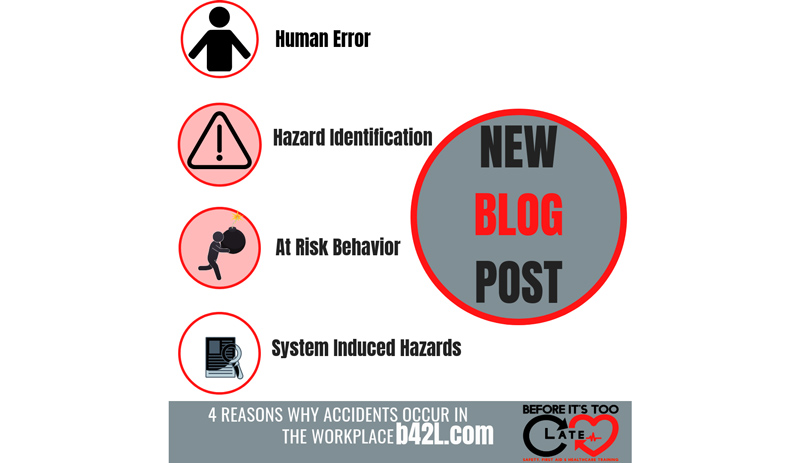
Below are some key areas to focus on when performing an accident investigation to help improve your company’s safety culture and performance.
1. Human Performance Tools
Human Performance Tools (HuP) refer to an operating philosophy explaining that people are fallible and make mistakes. Human Performance aims to create tools that individuals can utilize on a daily basis to strategically reduce the amount of mistakes that are made.
Here’s an example:
It is 6:30AM, and you are rushing to get to the office. You stop by a gas station to fill up, knowing it takes about an hour to get to your office with traffic. As you arrive to the fuel pump, you answer a phone call, and simultaneously begin to select your fuel and pump your gas. After filling up, and hanging up the phone, you look at the final price of your purchase on the receipt that was printed out. The price looks unusually different from previous experience. After further detail of the receipt, you discover that you had selected the incorrect fuel and now must call a towing company to have your vehicle towed to have the system flushed. A costly trip to the gas station could have been prevented had you been utilizing Human Performance. A simple self-check at the fuel pump before squeezing the handle could have saved you thousands of dollars, and you would have been to work on time.
Although this example is simple, this exact scenario happens every day. By utilizing Human Performance Tools, this error can be prevented.
2. Hazard Identification
Identifying and acknowledging hazards in the workplace is a proactive approach to minimize the risk an accident will occur. By identifying hazards before work begins, you can plan barriers and defense strategies to ensure no injury/damage occurs. Hazard Identification often takes place during a Pre-Job Safety Meeting and is documented on a Job Hazard Analysis (JHA).
During these safety meetings, the work to be performed is outlined step-by-step with corresponding hazards. Outlining the barriers and defenses to prevent a hazard is the most important part of the JHA. During these Pre-Job Safety Meetings, employees can share individual input and agree what the safest course of action to take will be.
3. At-Risk Behavior
Taking chances with safety is not a strategy for success.
Time and time again, it is proven that what can go wrong, will in fact eventually go wrong. This is called Murphy’s Law.
Ignoring hazards in the workplace on the basis of, “I’ve done this same routine for years without anything going wrong”, is a strategy for failure. Eliminating at-risk behavior in the workplace not only decreases the likelihood of an accident taking place, but it also strengthens company safety culture. Taking steps to improve workplace safety shows employees you care about their well-being.
4. System Induced Hazards
A System Induced Hazard is a hazard that is created or ignored through company policies and procedures.
Some examples of system induced hazards are:
- Time pressure to fit a predetermined production schedule
- Processes that increase fatigue
- Lack of correct tooling
- Lack of training on a piece of equipment or tool
- Etc.
To avoid System Induced Hazards, a company will often conduct an internal or external safety audit of its procedures and systems. Audits like these can uncover unforeseen hazards that are a result of poor procedures and systems put in place by management.
Conducting safety audits within the workplace is extremely important. These audits show employees that management has every intention to consistently innovate and update its procedures to prevent unforeseen hazards. In conjunction, management must ensure training is available to all employees in order to complete the task safely and successfully.
Final thoughts
Very rarely do accidents simply occur in the workplace sporadically or by chance. By incorporating Human Performance, Identifying Hazards before work begins, removing At-Risk Behavior, and eliminating System Induced Hazards, your company safety culture and performance will be improved.
Did this article help? We hope this toolbox talk was informative, helpful and easy to relate to. Please visit B42L.com to learn more about why incidents occur in the workplace and other safety topics to improve your company’s safety culture.