Remember playing Super Mario growing up? After collecting coins and stepping on Goombas and turtles Super Mario continued his conquest to save dear Princess Peach. He approached a tube. You pressed down on the joystick and down he went. What did we forget to do? A confined space entry assessment. Mario could have died!

So what is a confined space?
By definition a confined space has three unique characteristics:
- It is large enough to enter and work
- Has limited or restricted means for entry or exit
- Is not intended for continuous human occupancy
So yes, that pipe Mario dropped down into had one way in, and one way out (limited access/egress). Let’s continue to read to see what other hazards Mario faced.
What are the hazards of confined spaces?
Confined Spaces are inherently hazardous places you wouldn’t want to just hang out. Before entering any confined space, you must evaluate the space and determine if it is Permit Required or Non-Permit Required.
Non-Permit Required Confined Space
These spaces fit the definition of a confined space, however there are no additional hazards.
Permit Required Confined Space
A Permit Required Confined Space is a confined space that also contains or has the potential to contain additional hazards including:
- Atmospheric Condition (toxic gas, flammable atmosphere, asphyxiating, oxygen deficient)
- Potential for engulfment
- Configuration
- Any other serious recognized hazard
What are some real-life examples of confined spaces?
- Tunnels
- Wells
- Manholes
- Tanks
- Culverts
- Silos
- Vaults
- Open trenches/Holes greater than 5ft in depth (vertical spaces)
- Cellars
- Etc
So yes, we can confirm that Mario was for sure in a Permit Required Confined Space.
- We can guess that tube was greater than 5ft
- It also had limited oxygen levels. I don’t remember seeing any windows or ventilation
- Bowser was down there. He shoots fire from his mouth.
What to do if I come Across a Confined Space?
First and foremost you need to identify if the space is Permit Required or Non-Permit Required. Conduct a hazard assessment to identify all possible hazards the space has.
“So I’ve determined it is Permit Required”
What Mario should have done!
Before entering any permit required confined space there are a few things to do.
- Identify and document the hazards of the space (Normally this is filled out on a checklist/permit)
- Test the air for oxygen levels, combustibility, and toxicity in that order
- Ventilate the space if needed. Retest the air after the space has been ventilated and periodically while work is being performed.
- Lockout any equipment in the area that could start up and cause harm
- Write and post an entry permit to address all hazards
- Ensure all team members are trained on confined spaces.
- Prevent access to anyone who is unauthorized to enter
- Set up emergency rescue systems such has a Tri-Pod rescue system, or a horizontal lifeline.
- Identify roles and responsibilities of everyone involved (entrant, attendant, rescue, supervision etc)
- Use additional PPE as needed
- Set up a communication method between the entrant and attendant
Here is a flow chart on how to determine if your space is a Permit Required Confined Space!
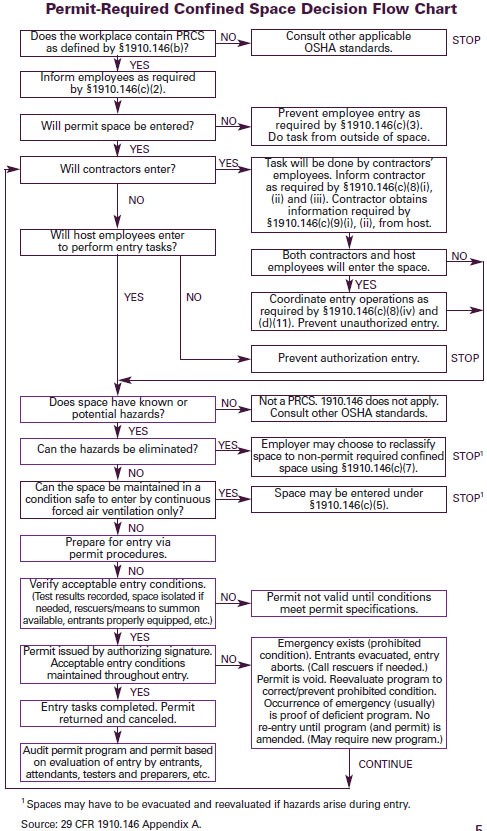
Additionally if your company/business provides self-rescue in any situation OSHA mandates CPR training be conducted. See 1910.146(k)(2)
Schedule training for your company today!
Looking back on it now, we really put Super Mario in a ton of grave danger. Imagine waking up one day, turning on your game system and all it says was, “Super Mario died due to confined space entry accident”. Don’t cut your life short. In the real world we don’t get three lives before the game is over. For full guidelines of confined spaces refer to CFR 1910.146.