
Summer days that are “Sunny and 75” will come and go quickly. Meaning, peak high temperature months are on the way. Keep your family, coworkers, and employees safe, by being prepared to prevent, recognize, and treat these 4 heat related emergencies.
1. Heat Cramps
The first Heat Related Emergency to monitor for this summer is heat cramps. Heat cramps occur when the body loses an excess amount of salt and water through physical activity. They can be extremely painful and are the first sign that you are becoming dehydrated.
Symptoms of Heat Cramps
Muscle spasms (typically in the calves and legs)
They can also occur in the abdomen and arms
Treating Heat Cramps
While working in extreme hot temperatures, follow these 3 steps to reduce your chance of suffering from heat cramps:
- Replace fluids with electrolytes
The order of most effective to least effective is:
- Commercial sports drink such as Gatorade or Powerade (Try Sqwincher drink packets for your crews)
- Coconut water or milk
- Water
The goal is to replace the lost electrolytes as quickly as possible, which is why water is our third option. Sip these drinks, do not gulp. Click the link below to check out Sqwincher drink packets. These are my favorite way to stay hydrated.
2. Maintain a good diet with plenty of potassium
Maintaining a good diet with high potassium will reduce the chance you will suffer from heat cramps. Some foods that are high in potassium include:
- Bananas
- Apples
- Pomegranates
- Spinach
- Avacados
- Brussel sprouts
3. Stretch the muscles
After replacing electrolytes, begin to slowly stretch the effected body parts. Perform slow stretches for 15-30 seconds at a time until muscle cramps go away.
2. Heat Exhaustion
The second heat related emergency to avoid is Heat Exhaustion. Heat Exhaustion is the body’s response to an excessive loss of salt and water. Heavy sweating occurs as the body tries to regulate its temperature.
Symptoms of Heat Exhaustion
- Light headedness
- Nausea
- Tiredness/exhaustion
- Heavy amounts of sweating
- The inability to perform normal tasks of walking and lifting
- Pale/ashen or grey skin
- Slower response or reflex times
Treating Heat Exhaustion
- Get to shade: It is critical after symptoms of heat exhaustion are noticed that the person be moved to a cooler area. Remove any extra layers of clothing the person may have on and place a fan near the person.
- Cool the body: Rapidly cool the persons skin with wet, cold towels or ice. Avoid placing ice directly on the person’s skin and wrap the ice in towels or clothing. Rotate cold towels or ice packs 20 minutes on, 20 minutes off and monitor the persons condition.
- Replace liquids: Just like heat cramps, have the person sip drinks with electrolytes and carbohydrates.
- Be Prepared to activate EMS Services: Monitor the person for changes in levels consciousness. if the situation is not getting better, be ready to call 911 for further assistance. Having someone else trained in CPR, is desired if the person becomes unresponsive.
3. Heat Stroke
Heat Stroke is the result of exposure to high temperatures for an extended period of time, where the body is unable to cool itself down. Normally occurring quickly after Heat Exhaustion, Heat Stroke, if not treated, can be fatal. During heat stroke, the blood in the body rushes to the vital organs as a defense mechanism. The person will actually stop sweating, and become extremely fatigued.
Being able to distinguish between heat exhaustion and heat stroke is crucial in how we respond.
Symptoms of Heat Stroke
There are key differences in heat exhaustion and heat stroke. Some key symptoms that are specific to heat stroke are:
- Hot/dry skin
- Hallucinations
- Throbbing headaches
- Chills
- Confusion/dizziness
- Slurred speech
Treating Heat Stroke
In cases of heat stroke, response time is critical. Follow these steps when responding.
- Call 911: The first thing to do, is activate EMS services and call 911. Emergency services, will be equipped with advanced forms of care to treat the person.
- Get the Person to Shade: Just as treating heat exhaustion. after we call EMS, get the person to a shaded area.
- Cool the body: Gradually cool the body down. If the person is cooled too quickly they could fall into shock. Remove all excess clothing, and apply ice packs and wet towels to the body.
- Be prepared to administer CPR: The person is in a life threatening state. Monitor for consciousness and be prepared to administer CPR. Locate the nearest AED, and have it available if the person becomes unresponsive.
4.Dehydration
Dehydration is the loss of water and salts essential for normal body function. Dehydration is typically a precursor of heat cramps, heat exhaustion, and heat stroke.
Symptoms of Dehydration
- Dry mouth
- Headache
- Tiredness
- Constipation
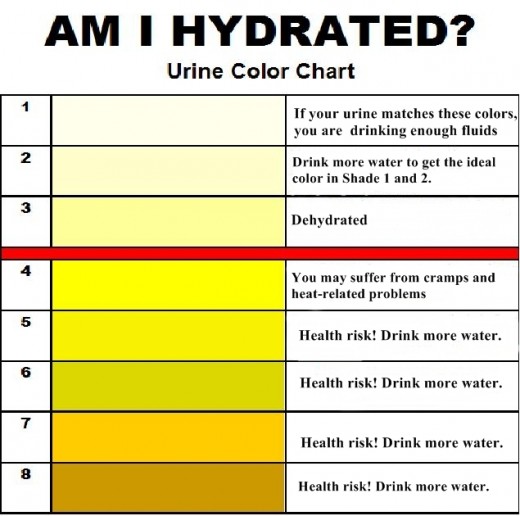
- Yellow or darkened urine
Preventing Dehydration
Replace your Fluids: The best way to prevent dehydration is to replace fluids every 20-30 minutes. Start hydrating the night before an expected exposure to hot temperatures. Do not wait until you are thirsty to replace fluids.
Be Prepared: Pack a cooler with extra water/fluids for the day and keep them at cold temperatures with ice.
Trust your Urine: Changes in the color of urine is a clear indicator that you are becoming dehydrated. See the chart below
Conclusion
Before you get out in the sun, follow these steps to avoid Heat Related Emergencies. Remember, our bodies act like sponges. When sponges are exposed to high temperatures for long periods of time, they dry out.