What is a workplace accident?
A workplace accident can be defined as:
“An unfortunate incident that happens unexpectedly and unintentionally while on the job, typically resulting in damage or injury.”
After an accident occurs, an investigation often ensues to figure out why the accident took place. Preventative actions are then put in place to avoid another occurrence of the same accident.
Below are some key areas to focus on when performing an accident investigation to help improve your company’s safety culture and performance.
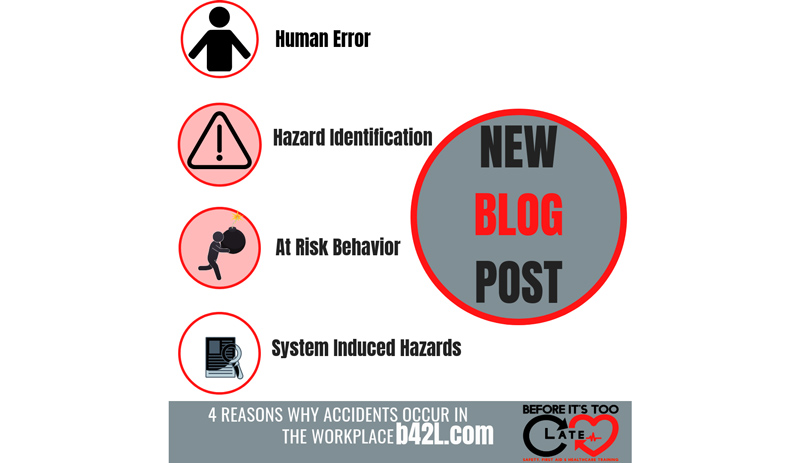
1. Human Performance Tools
Human Performance Tools (HuP) refer to an operating philosophy explaining that people are fallible and make mistakes. Human Performance aims to create tools that individuals can utilize on a daily basis to strategically reduce the amount of mistakes that are made.
Here’s an example:
It is 6:30AM, and you are rushing to get to the office. You stop by a gas station to fill up, knowing it takes about an hour to get to your office with traffic. As you arrive to the fuel pump, you answer a phone call, and simultaneously begin to select your fuel and pump your gas. After filling up, and hanging up the phone, you look at the final price of your purchase on the receipt that was printed out. The price looks unusually different from previous experience. After further detail of the receipt, you discover that you had selected the incorrect fuel and now must call a towing company to have your vehicle towed to have the system flushed. A costly trip to the gas station could have been prevented had you been utilizing Human Performance. A simple self-check at the fuel pump before squeezing the handle could have saved you thousands of dollars, and you would have been to work on time.
Although this example is simple, this exact scenario happens every day. By utilizing Human Performance Tools, this error can be prevented.
2. Hazard Identification
Identifying and acknowledging hazards in the workplace is a proactive approach to minimize the risk an accident will occur. By identifying hazards before work begins, you can plan barriers and defense strategies to ensure no injury/damage occurs. Hazard Identification often takes place during a Pre-Job Safety Meeting and is documented on a Job Hazard Analysis (JHA).
During these safety meetings, the work to be performed is outlined step-by-step with corresponding hazards. Outlining the barriers and defenses to prevent a hazard is the most important part of the JHA. During these Pre-Job Safety Meetings, employees can share individual input and agree what the safest course of action to take will be.
3. At-Risk Behavior
Taking chances with safety is not a strategy for success.
Time and time again, it is proven that what can go wrong, will in fact eventually go wrong. This is called Murphy’s Law.
Ignoring hazards in the workplace on the basis of, “I’ve done this same routine for years without anything going wrong”, is a strategy for failure. Eliminating at-risk behavior in the workplace not only decreases the likelihood of an accident taking place, but it also strengthens company safety culture. Taking steps to improve workplace safety shows employees you care about their well-being.
4. System Induced Hazards
A System Induced Hazard is a hazard that is created or ignored through company policies and procedures.
Some examples of system induced hazards are:
- Time pressure to fit a predetermined production schedule
- Processes that increase fatigue
- Lack of correct tooling
- Lack of training on a piece of equipment or tool
- Etc.
To avoid System Induced Hazards, a company will often conduct an internal or external safety audit of its procedures and systems. Audits like these can uncover unforeseen hazards that are a result of poor procedures and systems put in place by management.
Conducting safety audits within the workplace is extremely important. These audits show employees that management has every intention to consistently innovate and update its procedures to prevent unforeseen hazards. In conjunction, management must ensure training is available to all employees in order to complete the task safely and successfully.
Final thoughts
Very rarely do accidents simply occur in the workplace sporadically or by chance. By incorporating Human Performance, Identifying Hazards before work begins, removing At-Risk Behavior, and eliminating System Induced Hazards, your company safety culture and performance will be improved.
Did this article help? We hope this toolbox talk was informative, helpful and easy to relate to. Please visit B42L.com to learn more about why incidents occur in the workplace and other safety topics to improve your company’s safety culture.